You finally broke down and bought a pressure washer. Now you are staring at your driveway, your front walkway, and maybe even your pool deck, wondering what could possibly go wrong. The answer is plenty, and that is exactly why we wrote this guide.
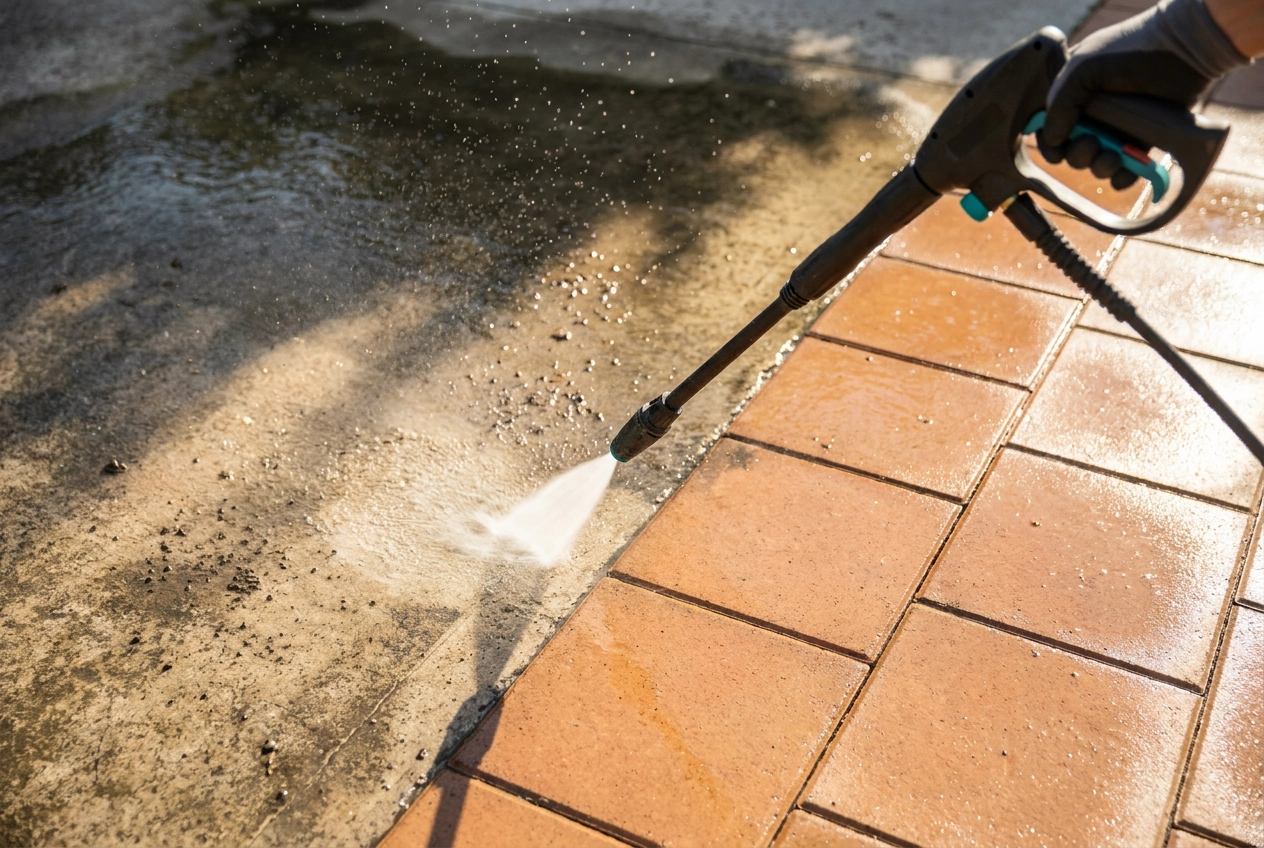
Driveway pressure washing can be incredibly satisfying, but it is not a one-size-fits-all chore. A setting that cleans concrete beautifully can etch pavers or blow the joint sand right out of a patio. Concrete, pavers, and travertine decking are all hardscape staples in Brevard, but they fail in very different ways under the wrong nozzle, pressure, or dwell time. You have to match the method to the surface, not just crank the machine to its maximum rating.
I am Seaton, the owner here at Seatown Window & Wash. I am 19, local, and I have learned that protecting your investment means knowing exactly what each surface can handle. We are licensed, insured, and focused on doing the job right.
In this post, we are breaking down everything you need to know. We will look at why concrete is forgiving but not indestructible, why paver joints are structural, and how travertine pool decks punish guesswork. By the end, you will know exactly what to ask before you book pressure washing services in Melbourne, Florida.
The Setting That Cleans Concrete Can Ruin Pavers
Most homeowners assume that because full power cleaned the concrete driveway, it will clean the paver patio out back just as well. That is the exact assumption this article corrects. A pressure washer’s maximum rating is the machine’s ceiling, not your surface’s limit. The surface should set the pressure, the nozzle choice and the dwell time, not the number printed on the side of the unit.
Dwell time is how long water, cleaner or the wand stays in one spot. A nozzle is the tip that shapes how concentrated the spray is.
A typical Brevard property has three hardscape surfaces: a cast concrete driveway or walkway, a paver driveway or patio, and travertine or stone pool decking. Each one fails in a different way.
That is why matching method to surface is a skill. It is the difference between a clean driveway and a re-sanded paver driveway. It is also why driveway pressure washing and a paver wash are not the same service. For a closer look at method choices, see Pressure Washing vs. Soft Washing: Which Does Your Home Need?.
Concrete: Forgiving on a Driveway, Not Indestructible
Concrete earns its forgiving reputation because it is a dense, continuous slab. There is no joint material between units, so there is nothing structural to blow out. In Brevard, shaded areas grow mildew and algae, driveways catch tire and oil stains plus sandy soil tracked from beds, and a grey dirt film dulls the original color.
Concrete still gets damaged by poor technique. Uneven passes leave wand stripes and lap marks. Spending too much time around control joints and cracks can wear away edges. Stamped, decorative, or sealed concrete is the most vulnerable because the finish is the feature. Remember: concrete is the toughest surface on the property, not the benchmark. Clean pavers like concrete and you will lose joint material.
One practical tip: work in even, overlapping passes and keep the wand moving instead of parking it over one stain.
Paver Joints Are Structure, Not Filler
Pavers are a different story. In permeable interlocking concrete pavement, joints are filled with open graded stone chip rather than traditional sand, and that joint material is part of how the system works. The units sit on a bedding layer over base and subbase layers, and in vehicular applications they are restrained by curbs, so force that overwhelms the system can affect that arrangement (FHWA Tech Brief HIF-19-021). In permeable systems, joint space can account for roughly 8 to 10 percent of the paved surface, so what happens there matters more than how the paver faces look. Those joints also clog with sediment over time, which reduces infiltration, and the guidance treats maintenance as preventive: right treatment, right time, plus annual monitoring (maintenance guide). In plain homeowner terms, anything that digs into a joint, drives joint material out, or concentrates force in one spot is working against the pavement’s design. That is why a pressure washing service that inspects joints first is doing a different job than one that starts at the machine’s top setting.
Permeable Pavers and Conventional Pavers Are Not the Same Job
So the joint is structural. But not every paver joint is built the same way. Permeable systems are designed with permeable aggregate in the joints so water can pass through. Conventional installations use a different filler entirely, typically sand swept into the joints (ICPI application guide). That is a different pavement with different behavior.
Here is where people get into trouble: they take a permeable paver number, like joints making up 8 to 10 percent of the surface, and apply it to a standard driveway. Those figures and infiltration rates belong to permeable systems only.
The principle that does carry over is simple. In both systems, joint material is a designed component. Disturb it, and you change how the pavement performs. Before anyone picks a washing method, find out what is actually in your joints: permeable aggregate, sand, or polymeric sand. That answer decides how careful the cleaning has to be. A careful operator may even work from condition references like ASTM E 2840-11 for conventional interlocking pavements.
What Goes Wrong When Pavers Get the Wrong Treatment
Knowing what is in the joints is step one. The wrong treatment rarely announces itself. Joint material washes out of the gaps first, and weeds, ants, and settle lines can follow. Paver units can shift or rock when force lands on one small area or water gets driven under the field. That is a repair job, not a cleaning job, much like putting off gutter cleaning turns a small miss into bigger work.
Colored, tumbled, or sealed pavers show striping and blotches from overlapping passes or cleaner left sitting too long. Mismatched cleaning solution and rinse volume leaves residue and streaks, which often means a second visit and sometimes a second bill. None of this needs a number to be true. It just needs someone rushing.
On pavers, the goal is to lift material off the surface without moving anything that is supposed to stay in place.
Travertine Pool Decks: The Surface That Punishes Guesswork
If pavers demand care, travertine demands more. It is a natural stone, softer and more porous than cast concrete, so concentrated force is more likely to leave a lasting mark than lift a stain.
A Brevard pool deck collects mildew and algae in shaded, low-drainage spots, sunscreen and lotion buildup, sand tracked from the yard, and mineral or chlorine residue near the waterline. The same humidity that makes Florida windows get dirty faster than you think feeds that growth.
Here is the part that surprises people: on travertine, more pressure does not buy more clean. The stone often will not show damage until the mark is already there. Start with a surface assessment, test a small area before the full deck, and choose a method made for stone, not the setting used on the driveway.
Concrete, Pavers and Travertine Side by Side
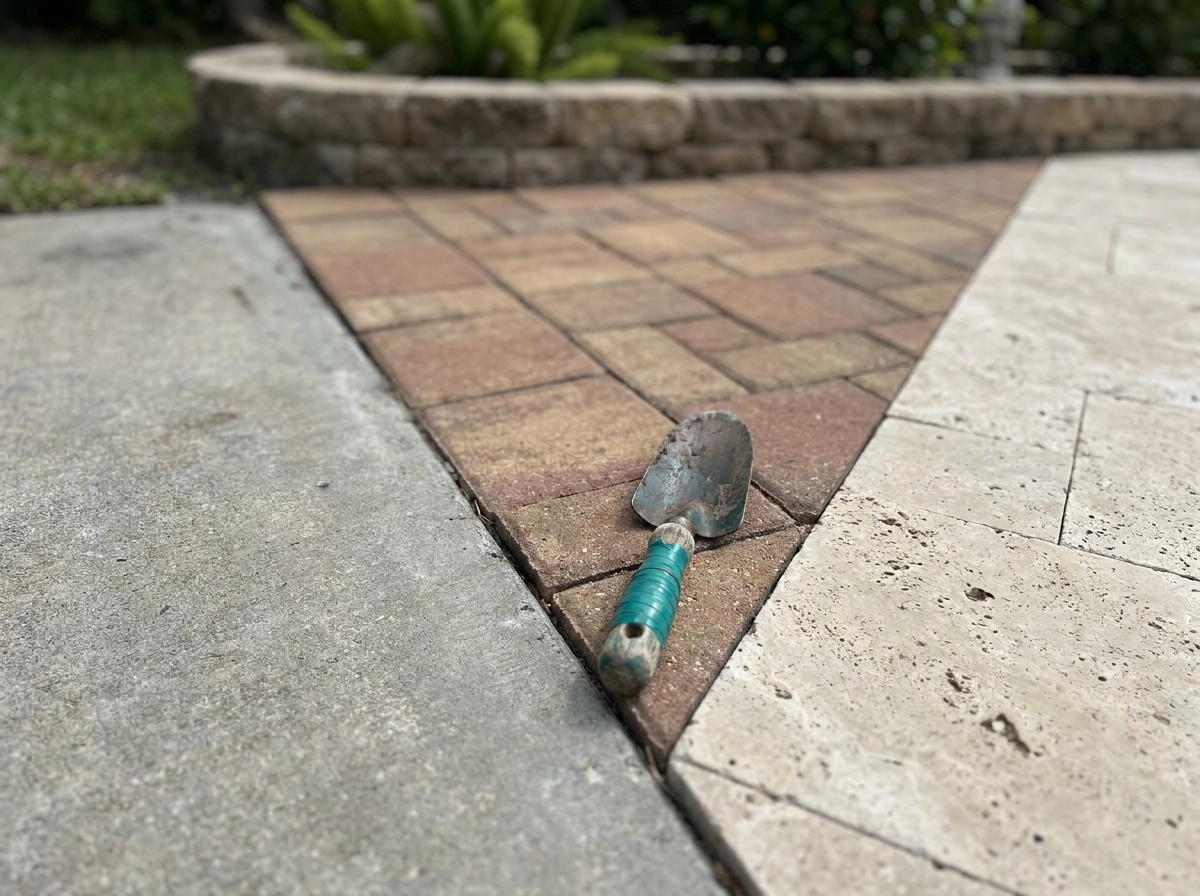
Put them side by side and the rule is simple: pressure, nozzle choice and dwell time change per surface, not per machine. Use this quick comparison before you pick a method, a pressure washing service, or a crew.
Surface | What cleans it | What damages it | Who should handle it |
|---|---|---|---|
Cast concrete driveway/walkway | Moderate pressure, even overlapping passes | Wand striping, over-cleaning cracks and joints | Most forgiving; most DIY-tolerant |
Permeable paver driveway | Careful surface cleaning that protects open joints | Dislodged joint chip, concentrated force, shifted units | Careful operator; joints checked first |
Conventional paver patio/walkway | Gentle cleaning matched to joint filler | Joint material washed out, moved pavers | Careful operator; ask what is in joints |
Travertine pool deck | Stone-appropriate cleaning only | Concentrated force, lasting marks | Least forgiving; leave to a pro |
The driveway setup should never roll straight onto a pool deck. Dirtier does not mean tougher. Concrete tolerates force that stone does not, and joint material in pavers is designed to stay put. Same machine, different surface, different method.
Why Hardscape in Brevard County Ages Differently
That table shows what each surface tolerates. In Brevard, local conditions decide how often it needs attention.
In our experience, year round humidity is the big one. Mildew and algae stay alive on concrete, pavers, and stone, so growth returns faster here than in a drier climate. That is why a one time cleaning rarely stays clean.
Sandy soil from yards, beds, and construction areas lands on driveways and pool decks. Fine sand also works into paver joints over time, which is exactly the material those joints are not meant to hold indefinitely.
Near the beach, salt air and frequent afternoon storms add rinse cycles, while wet season brings heavier organic debris. Oak, palm, and pine droppings leave tannins and organic matter that stain differently than plain dirt, and they need different treatment than mildew does. Live Oak Trees Make Gutter Buildup a Year-Round Problem in Brevard shows how persistent that debris can be.
A quick on site surface assessment is how we account for these variables before any work starts. Get a free quote.
What to Ask Before You Book Pressure Washing Services
Since mildew and joint buildup come back on their own schedule, the real question isn't whether to clean, it's who should do it. Ask any provider how they decide pressure and method for each surface. Listen for an answer that changes between a concrete driveway, a paver patio and a pool deck. If one setting covers all three, that tells you something.
Ask whether they check joint material before touching pavers and how they protect joints during the job. Someone who has thought about joints has thought about your repair bill.
Ask if soft washing or a lower pressure method is used where the surface calls for it, and whether a small test area gets cleaned first. Confirm licensing and insurance directly. A phone quote given without anyone asking what your surface is made of is a red flag.
Finally, ask about recurring maintenance. Around here, buildup returns whether or not you have a plan for it. Choosing pressure washing services is mostly about finding someone who asks these questions before you do.
How We Match Method to Surface in Melbourne
Those questions are exactly how we approach a job at Seatown Window & Wash. We are a locally owned, owner-operated exterior cleaning company based in Melbourne, serving homeowners across Brevard County and surrounding areas. Our rule is simple: the surface is the variable, so the method for a concrete driveway is chosen separately from the method for pavers or a travertine pool deck.
Our work includes pressure washing, house soft washing, window cleaning, gutter cleaning, and screen cleaning, and we are licensed and insured. We also offer recurring maintenance plans for homeowners who would rather stay ahead of mildew and joint buildup than deal with it after the fact.
Seaton started the company at 19, a local entrepreneur who built it around doing the job right. The best next step is a free quote, which starts with a surface assessment, not a number over the phone.
The Takeaway: Match the Method, Not the Machine
Here's the short version: concrete forgives extra force, paver joints are structure and can wash out, and travertine decking punishes guesswork.
So keep one rule in your back pocket. Pressure, nozzle and dwell time get chosen per surface, never per machine. The maximum rating printed on the side of a unit is a ceiling, not a starting point.
Two steps before anyone touches your hardscape. First, find out what is actually in your paver joints. Second, ask any provider to walk the property and identify each surface before quoting.
And remember that in Brevard, mildew, algae and sandy soil return on their own schedule. A recurring plan beats reacting after the damage is done.
Ready for a straight answer on your own property? Get a free quote from Seatown Window & Wash, and have someone who knows the difference between a driveway and a pool deck take a look.
Conclusion
The takeaway is simple: match the method to the surface, not the machine. Concrete can handle more pressure but isn't indestructible; paver joints are structural and can wash out; travertine pool decks punish guesswork; and permeable pavers require a different approach than conventional ones.
Before booking any pressure washing service, find out what's in your paver joints and ask the provider to walk your property and identify each surface first.
Seatown Window & Wash is local, owner-operated, licensed and insured, and built around doing the job right. Seaton started the company at 19, and that same attention to detail shows in every surface assessment.
Ready for a straight answer on your own property? Get a free quote from Seatown Window & Wash, and have someone who knows the difference between a driveway and a pool deck take a look. Your hardscape will thank you.