You can spend an hour on the glass and still have windows that look dirty from the curb. That's because the parts that actually decide whether a home looks clean aren't the panes at all. They're the tracks, sills, weep holes and frames quietly collecting Brevard County pollen, sand and mildew while the glass sparkles above them.
If you've ever wiped a windowpane spotless only to notice a gray film along the sill a week later, you already know the frustration. The yellow dust that coats everything from January through June doesn't stop at the glass. It settles into every groove and ledge, and regular rain pushes it deeper.
So this isn't another glass-cleaning explainer. It's a walk through the half of a window most of us never look at: the parts a real window cleaning service should handle, and the parts a quick wipe-down leaves behind.
We'll cover why Brevard turns window tracks into dirt magnets, the four components that make or break curb appeal, and what to ask any window cleaning service before you book. By the end, you'll know exactly what to request in writing so your windows look clean from every angle.
At Seatown Window & Wash, Seaton is a 19-year-old local business owner right here in Melbourne, licensed, insured and detail-oriented. If your windows need the whole treatment, not just the glass, reach out for a free quote.
The Half of a Window You Never Actually Look At
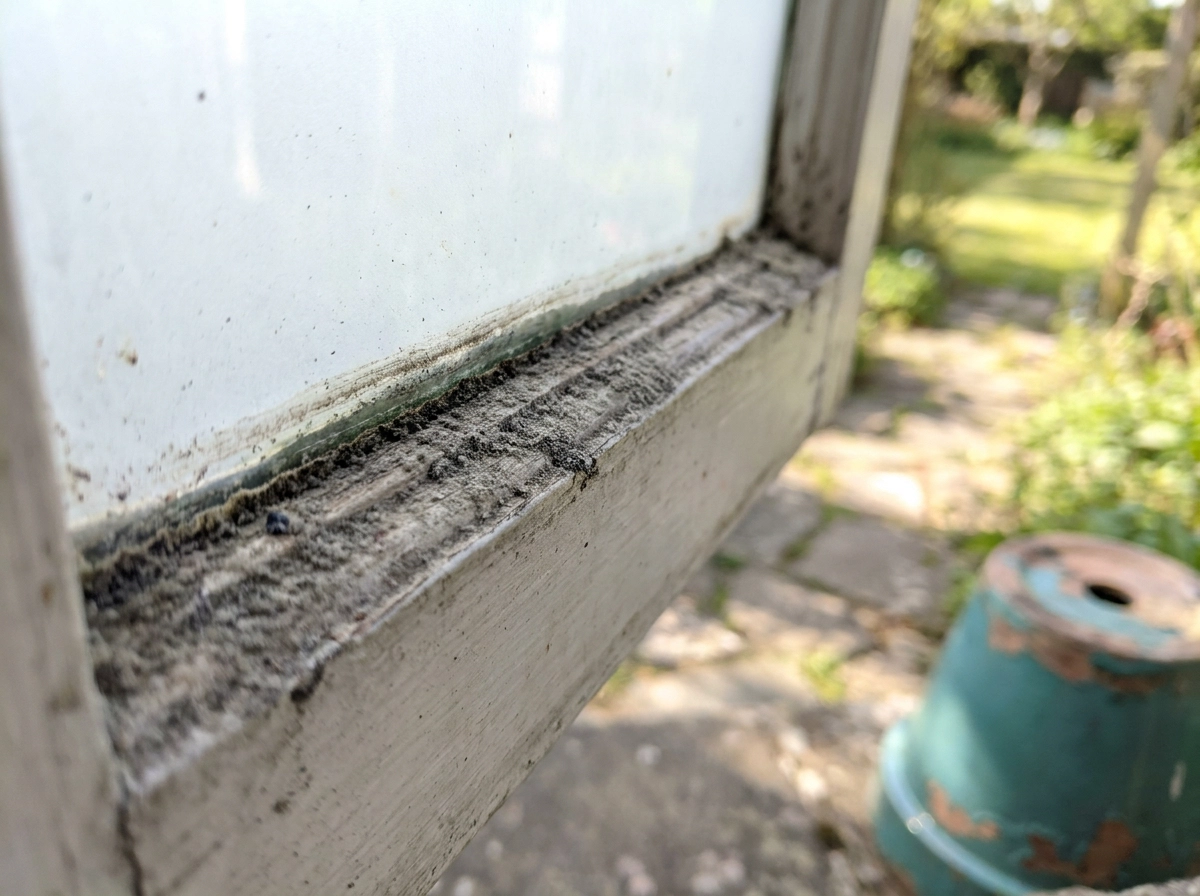
Stand inside on a bright morning and the glass looks perfect. Look down. The bottom edge of the frame is grey with pollen, grit, and a dark line in the corners. From the driveway, that edge is the first thing your eye reads. Glass is the easiest part of a window to clean and the easiest part to fake. Tracks, sills, weep holes, and frames are what separate a wiped pane from a genuinely clean window. This is not a DIY tutorial. It is a buyer's guide to scope: know which components a real window cleaning service covers, and get that list in writing before anyone shows up. That matters even more here, as the next section explains.
Why Brevard County Turns Window Tracks Into Dirt Magnets
Florida's pollen season runs January through June, and how bad it gets depends on local tree species and climate, per UF/IFAS reporting. In Brevard, that means yards full of oaks and pines, wind-pollinated species that UF/IFAS publication FR268 notes must produce massive amounts of pollen. The same reporting describes a yellow-dust-on-every-surface problem: pollen settles on everything outside the house, and wind and rain push it around rather than wash it clean. FR268 adds that a few simple steps minimize pollen effects around the home and that species selection and landscape planning can reduce the problem, but Brevard's tree mix keeps the supply steady.
Add coastal humidity and sand from places like Melbourne and the beachside, and that dust becomes a gritty film. Rain doesn't rinse it off the house; it sends it downward, straight into tracks and onto sills. In our experience on Brevard homes, debris sitting in those channels keeps surfaces wet long after the rain stops and leaves staining behind, a local observation, not a published standard. For pollen or landscaping questions, UF/IFAS Extension Brevard County is a helpful local resource.
That residue cycle is why the parts you rarely look at matter most. Next, let's walk through the four that decide whether a window actually reads as clean.
Four Parts That Decide Whether Your Windows Look Clean
In general terms, the frame holds the glass, the sill sits below it, the tracks carry the moving panels, and the weep openings drain whatever gets past the sill. These are working definitions for this article rather than a sourced standard.
Skip any one of them and the whole thing shows. Glass-only work actually makes it worse: in our experience, dirt loosened from the pane can drop into the track, and the next rain can turn that residue into a muddy strip along the bottom, which is why glass-only work often leaves the window looking worse at the base.
So here is the standard this article uses. A clean window means clean glass and clean hardware, sills, drains and screens. Each of the next four sections ends with what clean should actually look like.
Treat this as the checklist you hold a window cleaning service to when you request a quote.
Tracks: Where Pollen, Sand and Dead Bugs Settle
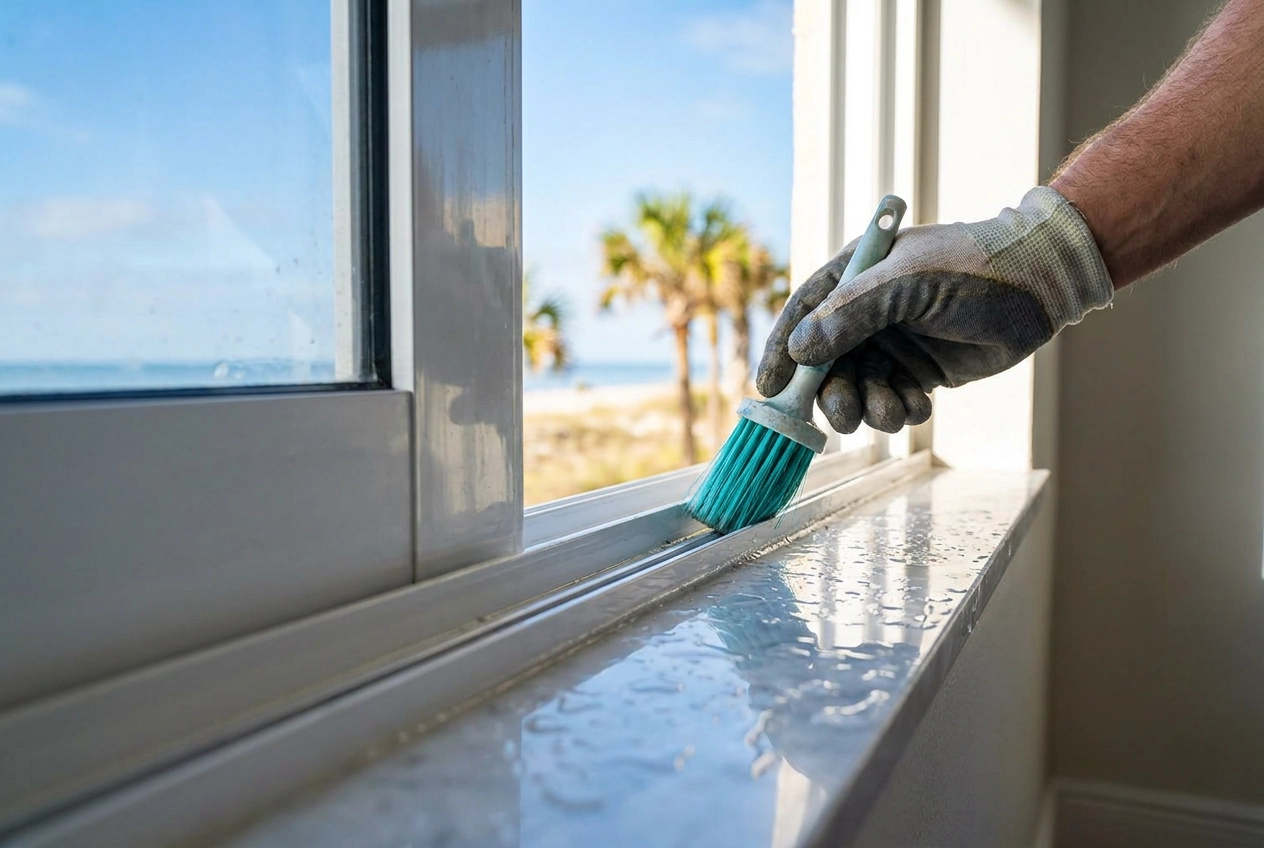
Tracks are the first component on that checklist: the channels the sliding or lifting panels ride in, and on nearly every Florida window they sit open to the sky. In our experience across Brevard, one season can load tracks with pollen, fine sand, grass clippings, insect debris, and the dark residue that forms when the mix gets wet and dries out. A wet rag dragged along the track smears residue into the corners and across the drain path instead of lifting it, and corners are where homeowners inspect first. Clean means no grit under a fingertip, no dark line where the track meets the frame, and clear drain slots at the corners. After pollen season, we usually find tracks are the dirtiest part of a Brevard window, which is why a window cleaning service quote that never mentions them is the first thing to question. Curious who stands behind that standard? Hi, I'm Seaton.
Sills: The Ledge That Catches Everything Rain Washes Down
Once the track is clear, look just below it. The sill is the horizontal ledge at the base of the window, built to move water off and away from the wall. In practice, it is also where the glass sheds everything rain washes down. On homes across Brevard County, our crews regularly see the same tell-tale look on neglected sills: a brownish bloom, a rough chalky texture, and residue packed into the seam where the sill meets the frame or trim. That is local observation from the job, not a rule.
Sills are built to move water off and away from the wall. When debris blocks that path, water stays on the sill instead of leaving. A window cleaning service should reset that condition, not just wipe the flat surface. Clean means a dry, smooth, residue-free sill and frame edge with an open path for water to exit, plus surrounding trim and caulk lines wiped rather than skipped. Ask for that whole sill area in writing.
Weep Holes: The Tiny Drains Most Homeowners Have Never Heard Of
If the sill is where water gathers, weep holes are where it is supposed to leave. They are the small openings at the bottom of the sill and frame that let water drain out of the window assembly instead of sitting against the house. In plain terms, they are the drains for your window.
They clog fast. Based on what we commonly see on Brevard homes, pollen, sand, paint, caulk residue, and insects can block these openings, and then water that should leave sits where it lands. As a practical rule we follow on every job: clear them by hand or with gentle rinsing, never with high pressure. Blasting water into a window assembly risks pushing debris deeper and turning a small clog into a larger problem.
Here is a simple test: wipe a finger along the opening. If grit or gunk comes out, bring it up with whoever cleans your windows. A real window cleaning service should know how to clear these drains safely. Once the drains are open, frame edges and screens are the last places where dirt still shows.
Frames, Screens and Edges: The Last Five Percent That Shows
Once the weep holes drain freely, look at the last five percent: the perimeter of the glass, frame edges, and white vinyl or painted trim. That is where streaks and mineral marks dry in place, and mineral marks and water spotting tend to collect at frame edges and perimeter trim, which is where they show up in photographs. In practice, screens act as the first filter for pollen and dust, so they hold a season of buildup. A quick swipe just pushes it around; screen cleaning belongs in a proper visit, with rinsing and drying. On exterior glass, we use purified water-fed pole systems, which dry without the mineral residue that tap water can leave along the edges, a method choice that shows in the finished result. Skip frames and screens and the pane may be done, but from the street the window still looks dirty. That is the result you actually paid for.
What a Real Window Cleaning Service Covers and What a Wipe-Down Leaves Out
Frames and screens are a good start, but they are not the whole scope. A pane-only wipe-down leaves tracks, sills, frame edges, screens and weep openings untouched. A full exterior window cleaning handles all of them, because that bottom edge is what your eye catches on the walk to the front door. There is no single published standard for what a window cleaning service includes, so compare scopes and ask questions instead of assuming an industry norm.
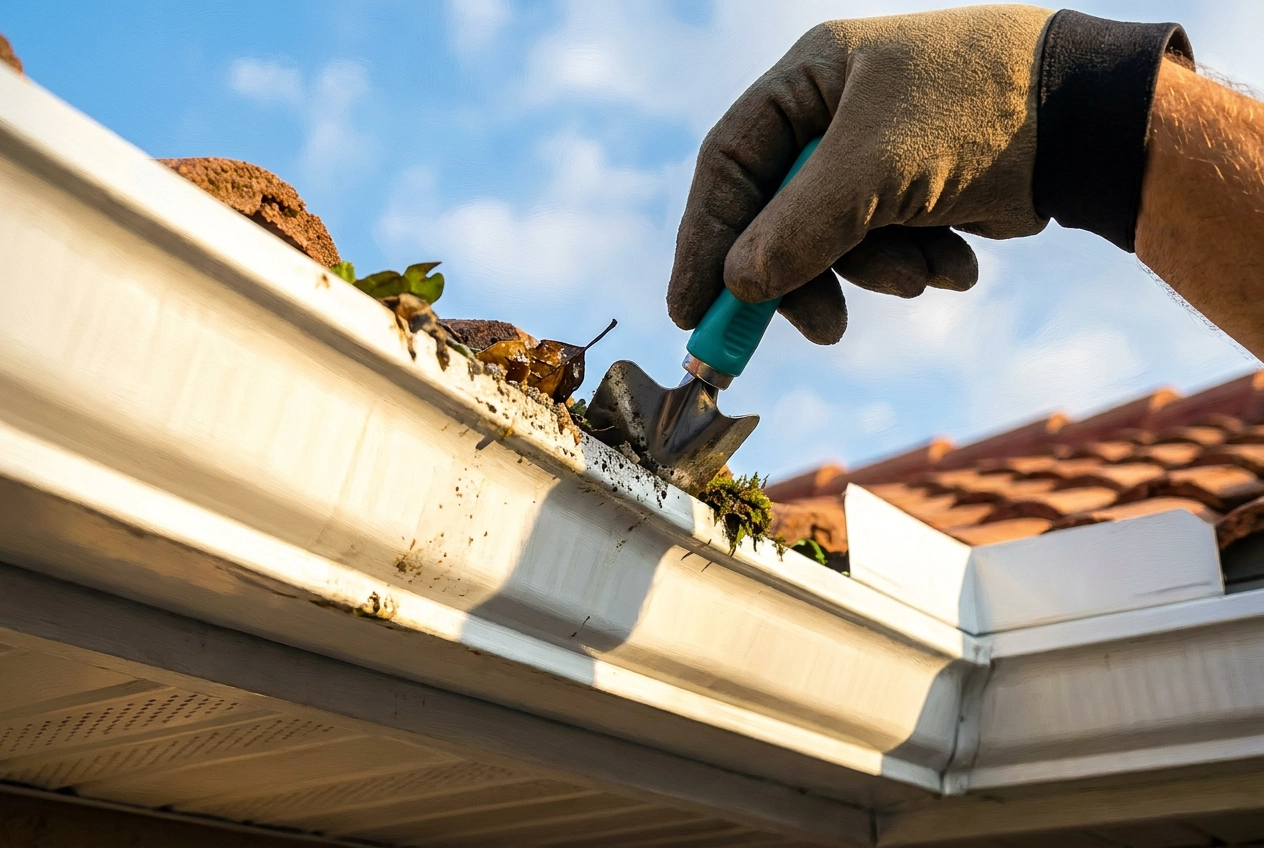
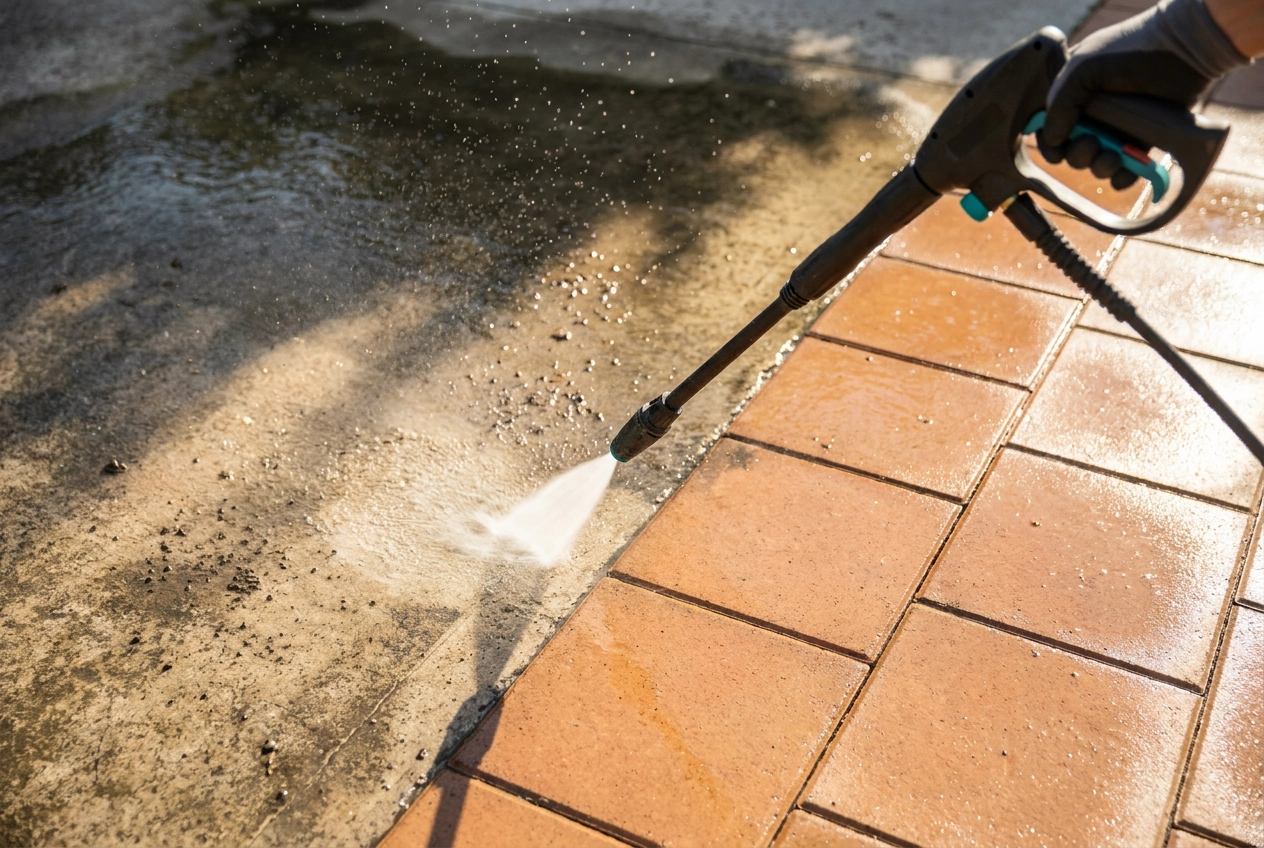
At Seatown Window & Wash, a visit includes exterior window cleaning with purified water-fed pole systems, screen cleaning, and soft washing where siding, trim and nearby surfaces need it. We also handle pressure washing, house soft washing, and gutter cleaning for the rest of the exterior.
The difference shows. Glass can look spotless while tracks and sills hold pollen and moisture against the frame. Brevard reloads those parts every pollen season, so a one-time clean resets the clock while a maintenance plan keeps them from rebuilding that layer year after year.
What to Ask Any Cleaning Window Service Before You Book
Since there's no industry-wide list of what window cleaning covers, put these questions in writing before anyone books a visit.
Scope: Which components are included? Name them specifically: tracks, sills, weep openings, frame edges and screens. Ask which items count as extras.
Method: Hand cleaning or purified water-fed poles? Does any high pressure go near weep openings or seals? Do screens come out, get rinsed and get dried?
Trouble spots: Interior tracks, second-story sills, screened porches and window wells where debris piles up. Confirm they're covered, not assumed.
People and protection: Who does the work? Is the company licensed and insured? What happens if a screen, seal or piece of trim gets damaged?
Price: Get the quote in writing before the visit and confirm it won't shift once the crew starts. If you bundle pressure washing, house soft washing or gutter cleaning, apply the same clarity. A company that also maintains gutters should quote each service line by line.
Your phone checklist: What's included? How do you clean weep holes and screens? Are second-story sills covered? Are you licensed and insured? What if something breaks? Is this quote final? Bundled services covered the same way?
Ask these once and you'll know exactly what you're paying for.
Why Local, Owner-Operated Matters on Detail Work
Those questions matter because detail work comes down to the person doing it. Corners get attention only when the crew cares about corners, so who shows up matters more than the ad that got you to call.
Seatown Window & Wash is locally owned and operated by Seaton, a 19-year-old local entrepreneur in Melbourne, Florida, serving homeowners throughout Brevard County and surrounding areas, using the same purified water-fed pole systems and full-scope service described above, with transparent pricing, recurring maintenance plans, and licensed and insured coverage. And because we deal with the same pollen season and humidity you do, tracks, sills, and weep channels get real attention on every visit, not a mention in a brochure.
Your Next Step: Ask for the Whole Window, Not Just the Glass
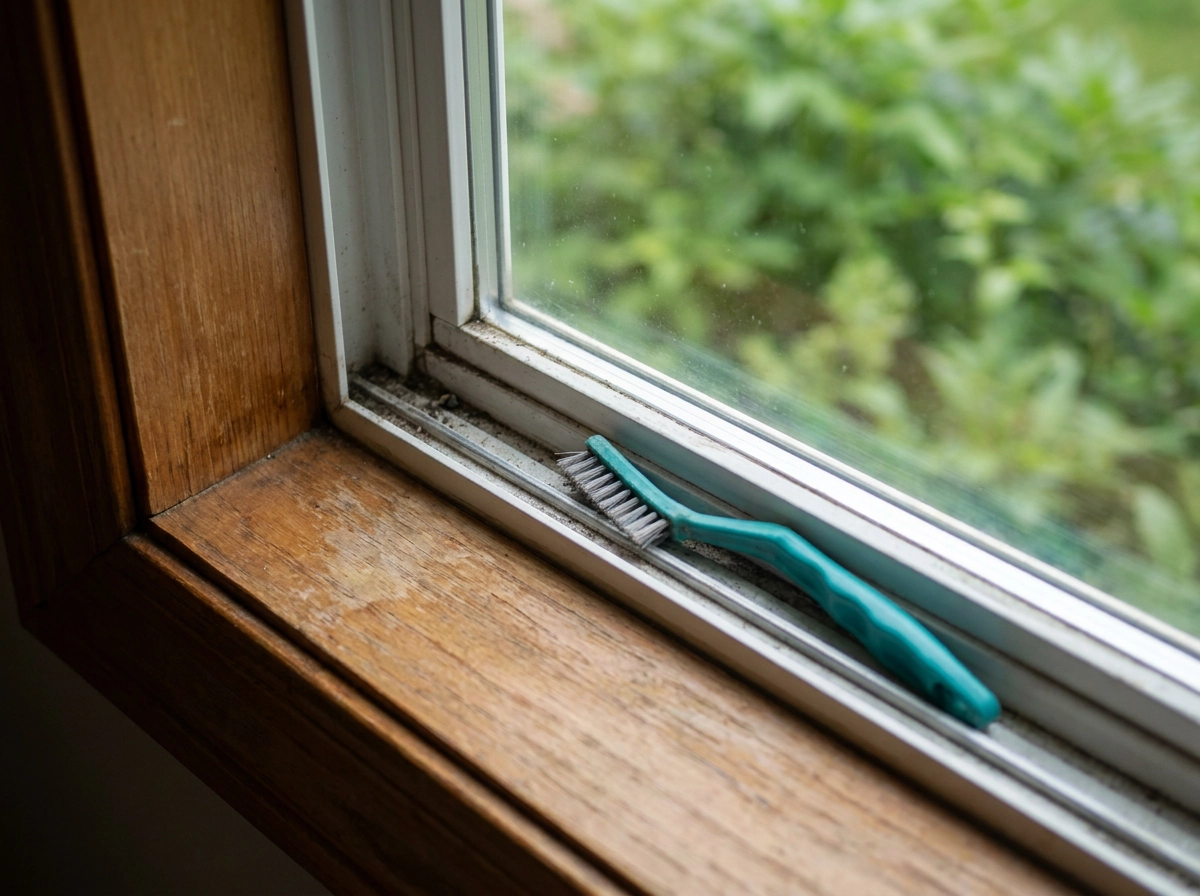
So before you book anyone, remember that the whole window is what sells the clean look. Tracks, sills, weep openings, frame edges and screens carry the result, and glass alone never does.
Ask any window cleaning service for the component list in writing. Make sure tracks, sills and weep channels are on it. Skip high-pressure shortcuts around weep openings and seals, and treat clogged drains as a sign the scope was too narrow.
If you are in Melbourne, Palm Bay or anywhere in Brevard County, request a free quote from Seatown Window & Wash. Ask specifically how tracks, sills, weep holes and screens are handled. Then, once the job is done right, ask about a recurring maintenance plan so pollen season does not get a head start on you next year.
Conclusion
The difference between windows that look clean and windows that actually are clean comes down to the parts you rarely think about.