Most Florida homeowners figure they'll get around to cleaning their screen enclosure when it starts looking dirty. That seems reasonable, right? The problem is, by the time you can actually see the green streaks and dark patches forming on your screens and frame, the damage has already been quietly building for months.
Living in Brevard County puts your screen enclosure up against some genuinely tough conditions. You've got humidity, storm season, salt air drifting in from the coast, and trees dropping organic debris that feeds biological growth year-round. It's a lot more aggressive than what homeowners in other parts of the country deal with, and a generic "clean it once a year" schedule just doesn't cut it here.
In this post, we're going to break down exactly how often you should be cleaning your screen enclosure based on real Florida conditions, not guesswork. You'll learn what the environment is actually doing to your enclosure, what a smarter cleaning schedule looks like for Brevard homeowners, why pressure washing can make things worse, and what happens to your wallet when cleanings get skipped. Let's get into it.
If You Can See the Algae, You're Already Behind
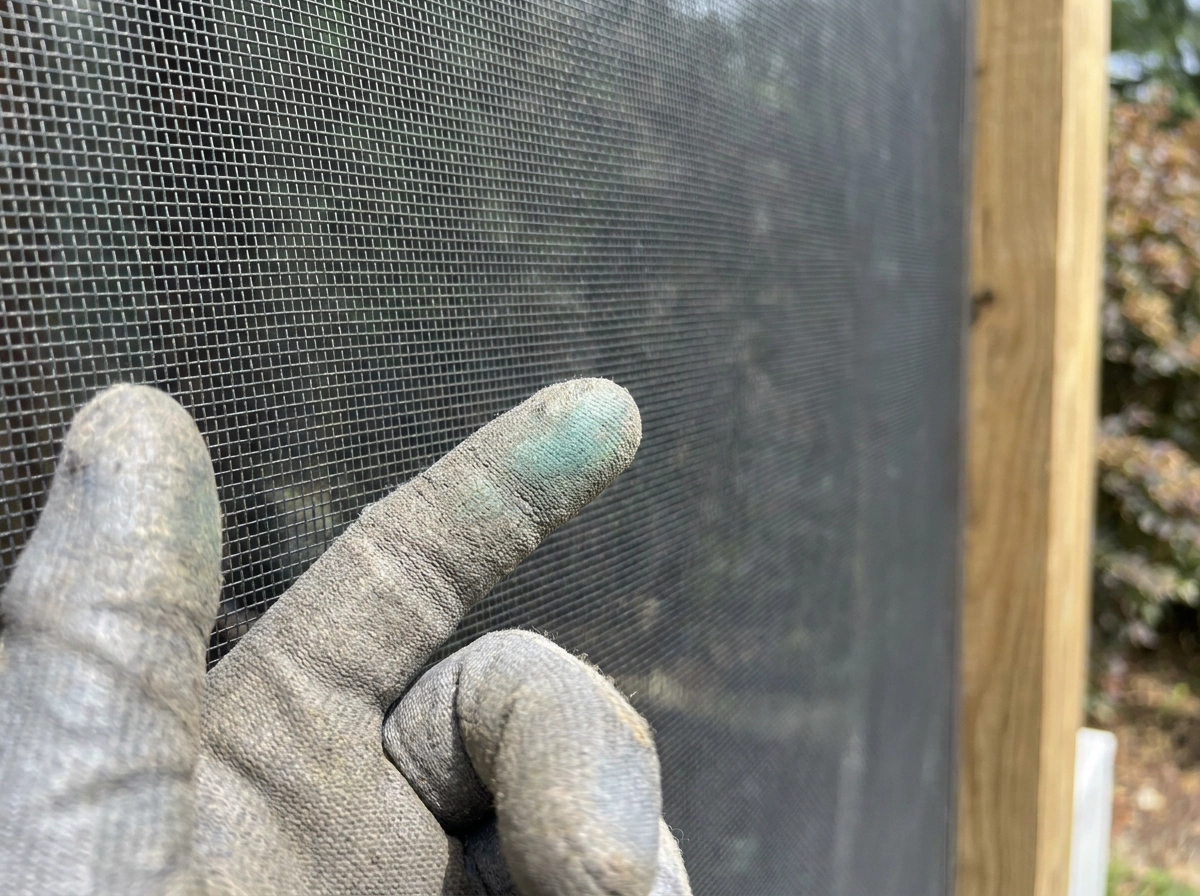
Most homeowners schedule a screen enclosure cleaning when they spot green or black buildup on the mesh. That instinct is understandable, but by that point, the damage has already been underway for months.
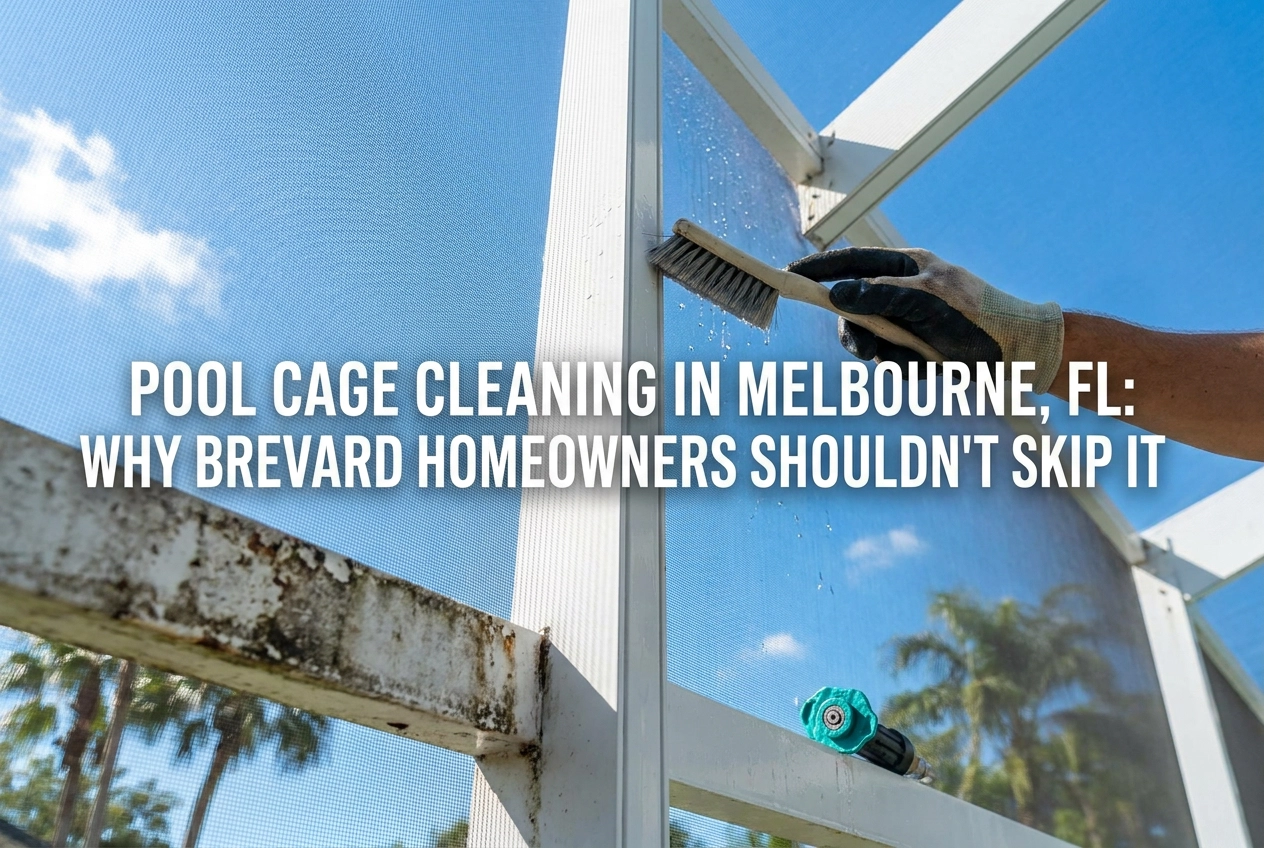
The organism responsible is Gloeocapsa magma, a cyanobacterium (blue-green algae) that thrives on moisture and humid air. It colonizes screen mesh and aluminum framing long before it produces the dark streaking homeowners recognize. The visible discoloration is actually its UV-protective outer coating, which only develops after the colony has been established and growing for some time. If your enclosure looks clean, that does not mean it is clean.
Once visible growth does appear, it behaves like a micro-sponge, holding moisture against the mesh and frame even during dry stretches. That sustained dampness creates the conditions the Brevard environment is already primed to exploit, which is why professional maintenance before visible growth appears is the standard, not the exception. The same process behind black roof stains affects outdoor structures throughout Florida.
The mindset shift that matters: screen enclosure cleaning is preventive maintenance, not cosmetic cleanup. Waiting for a visual trigger means you are reacting to damage that is already in progress, not preventing it.
What Florida Is Actually Doing to Your Screen Enclosure
Florida's warm, humid air gives biological growth everything it needs to colonize your enclosure's aluminum framing and screen mesh continuously. Brevard County's subtropical climate makes avoidance essentially impossible.
Salt air compounds the problem in a way that inland Florida homeowners don't face at the same intensity. The Atlantic carries microscopic salt particles that drift inland and settle on every surface of your enclosure. That thin film dissolves in humidity, forms a corrosive solution, and begins attacking aluminum at the surface level, promoting oxidation, degrading paint or powder coating, and weakening the framing over time. The closer you are to the coast, the faster this process moves.
Meanwhile, green algae and lichen aren't just sitting on the surface of your screen. Over time, biological buildup across the mesh surface traps moisture and debris, reducing airflow and adding weight the material was not designed to sustain.
Spring and summer bring waves of organic debris, pollen, insects, and airborne particulates, that layer onto the enclosure surface and feed biological growth during the months when humidity is already at its peak. The same environmental factors that affect why Florida windows get dirty faster than you think apply directly to your screen enclosure.
None of these are isolated events. They are continuous processes working on your enclosure every single day, which is exactly why a cleaning schedule built around visible results will always leave you behind.
The Real Cleaning Schedule Brevard Homeowners Need
Given all those continuous environmental pressures, the next question becomes practical: how often does cleaning actually need to happen?
The baseline schedule for most Brevard homes is two professional cleanings per year. One in spring, before peak humidity and storm season arrive, and one in late fall after hurricane season closes. This timing isn't arbitrary; it brackets the two periods that do the most cumulative damage.
A few factors push that schedule even tighter:
Heavy shade or oak canopy overhead. Mature oaks trap pollen, debris, and moisture against the enclosure year-round. These lots typically need cleaning every 6 to 9 months rather than annually.
Proximity to the coast. If your home sits within a mile or two of the Atlantic, salt air exposure is accelerated. Lean toward the 6-month interval and check aluminum framing condition between visits.
Post-storm events. A significant hurricane warrants a third cleaning visit, not because the enclosure looks destroyed, but because concentrated storm-deposited salt and debris create conditions that seasonal scheduling doesn't account for. That protocol gets a full breakdown in the next section.
It's also worth noting that the same logic applies to other surfaces on your home. Window cleaning in Brevard County follows a similar coastal-adjusted framework.
Waiting for visible green buildup or streaking before scheduling puts you one to two biological growth cycles behind. By then, the damage driving premature replacement is already underway.
Hurricane Season and Your Screen Enclosure: What Nobody Tells You
That third annual visit isn't a bonus service. It's where the real protection happens.
When a tropical storm or hurricane moves through Brevard County, the immediate concern is structural: did the frame hold, did any panels blow out? But storms that leave your enclosure standing can still do serious damage. High-velocity winds carry salt spray far inland at concentrations that dwarf ordinary coastal mist. That salt doesn't evaporate. It bonds to aluminum framing, and once it dries, research on aluminum alloys in marine environments confirms that electrochemical corrosion can begin within days.
Brevard County's position along the Space Coast puts it directly in the path of Atlantic storm tracks every season. That's not a worst-case scenario; it's the baseline reality here. Post-hurricane cleaning isn't optional maintenance for unlucky years. It's a recurring part of owning a screen enclosure in this county.
A proper post-storm cleaning should go beyond rinsing off debris. The inspection needs to cover mesh integrity, frame joint condition, and fastener points where storm impact may have created new standing water contact, because that's where long-term deterioration quietly starts.
Homeowners on a twice-yearly schedule who skip this visit are leaving the single highest-concentration salt and debris load of the entire year sitting on their enclosure. If you're already getting your gutters ready before hurricane season, fold screen care into that same post-storm routine.
Think of it as protecting the investment the first two cleanings already made.
What Skipping Cleanings Actually Costs You
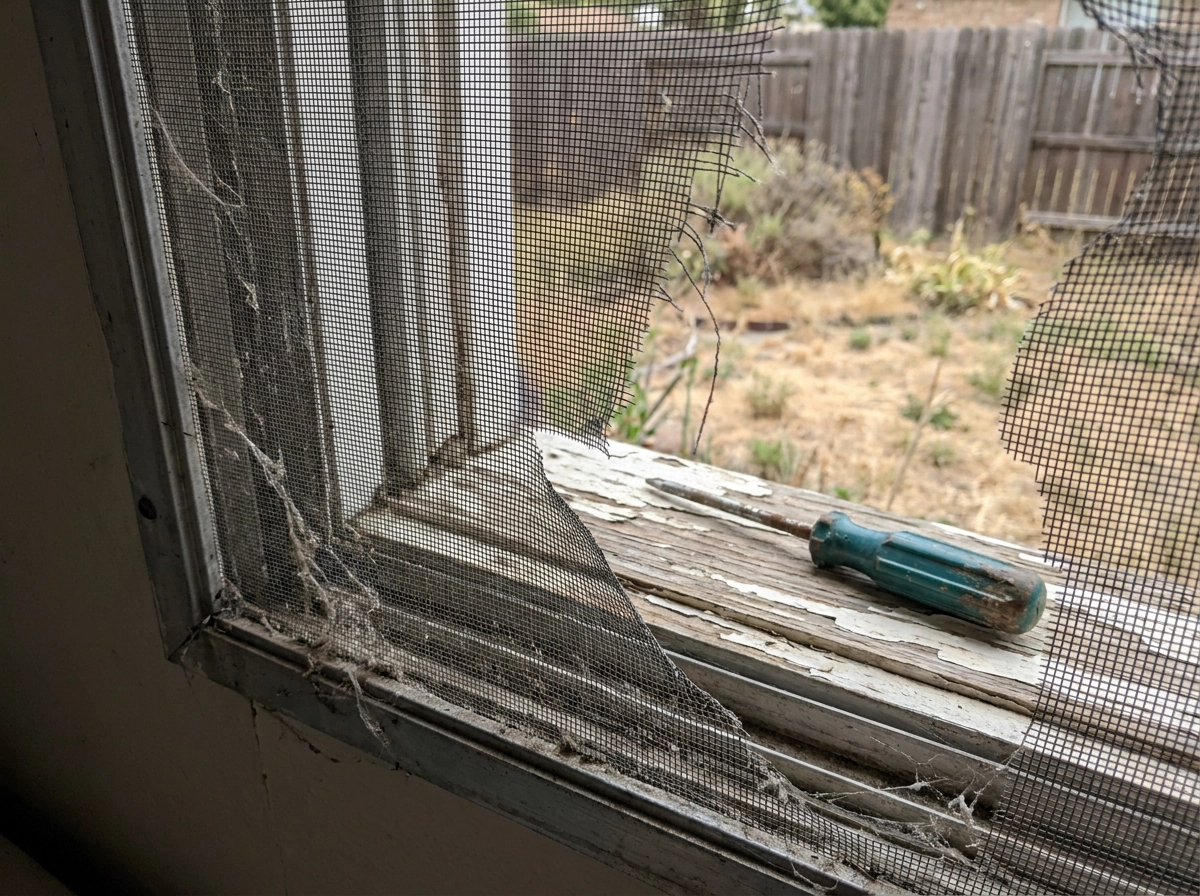
But what happens to homeowners who skip the routine maintenance entirely? The numbers tell a clear story.
Rescreening a full enclosure in Brevard County runs roughly $1,500 to $4,500. A complete replacement can reach far higher depending on size and framing condition. Two professional cleanings per year cost a fraction of either figure.
The damage pathway is straightforward. Screen mesh that goes uncleaned accumulates organic load that accelerates surface degradation, a process the salt-air and UV environment compounds, ultimately shortening the lifespan of material that would otherwise remain serviceable.
Aluminum framing faces a similar problem. Surface oxidation, driven by salt air and trapped moisture, is stoppable with consistent cleaning. Once it progresses past the surface, cleaning can no longer reverse it. Repainting or replacing frame sections is the only option at that point, and both are avoidable with regular upkeep. The same principle applies to roof surfaces exposed to Brevard's environment, where deferred maintenance costs consistently outrun routine cleaning expenses.
Beyond repair bills, a deteriorating enclosure affects how your home shows during a sale, reduces your usable outdoor space, and quietly erodes one of Florida's most practical home features.
The math is simple: routine pool screen enclosure cleaning is a maintenance expense. Skipping it converts that modest cost into a large, unavoidable one.
Why Pressure Washing Your Screen Enclosure Is a Mistake
Knowing the cost of neglect is one thing; understanding how damage happens during cleaning itself is another.
Standard pressure washers are built for concrete driveways and brick walls, not aluminum framing and fine mesh. Pointed at a screen enclosure, that force tears mesh panels, bends frame sections, and blows apart joints. The enclosure goes in dirty and comes out damaged.
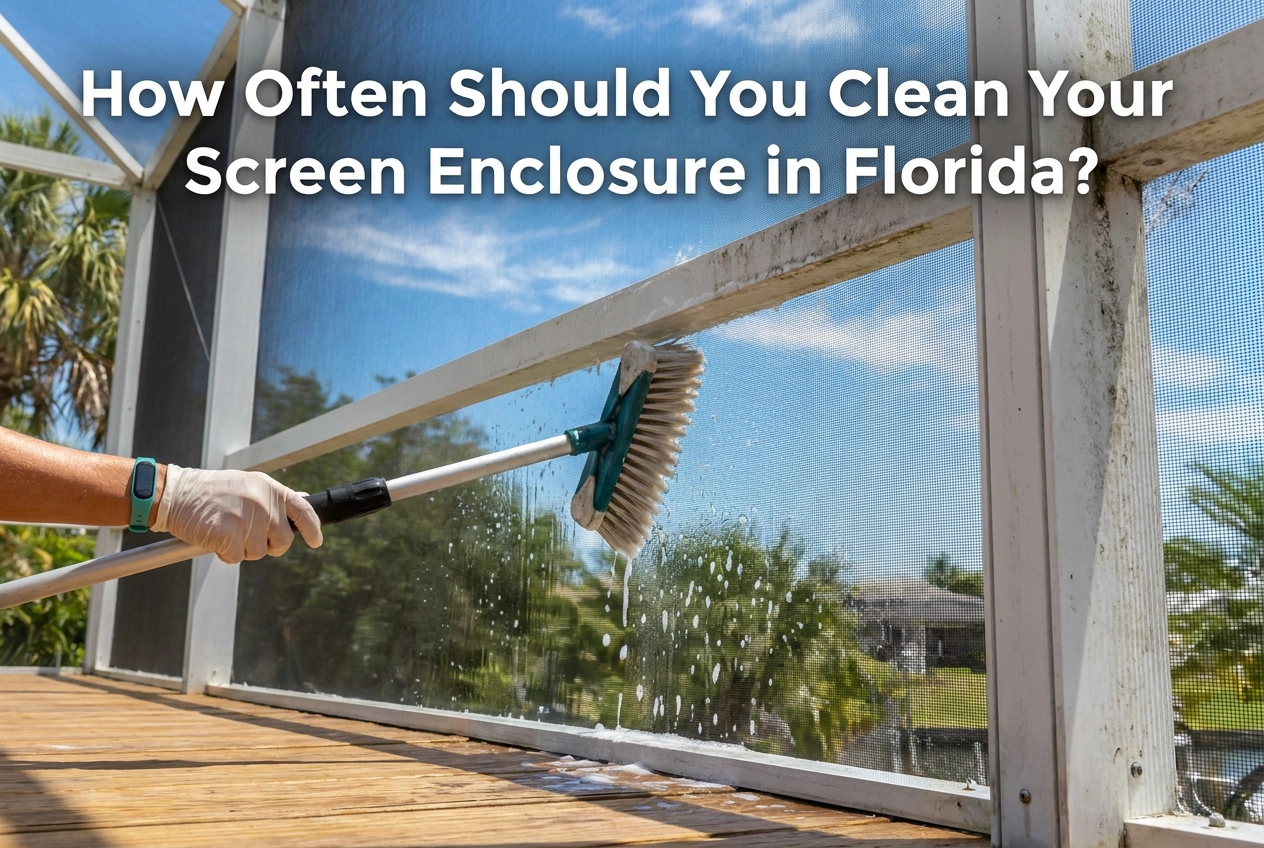
Professional screen enclosure cleaning uses soft washing, operating at low pressure well below what damages mesh or framing. The real work is done by custom-formulated chemical solutions that kill organic growth at the root rather than blasting the surface.
That distinction has one practical consequence: pressure washing removes the visible symptom without eliminating the biological source. Because soft wash chemistry addresses the biological source rather than just the visual symptom, it extends the time before growth returns, unlike rinsing alone. Soft wash chemistry uses surfactants and biocides formulated to kill organic growth at the source rather than displace it, slowing the return of visible buildup between visits.
DIY attempts with garden hoses, scrub brushes, or rented pressure washers fall into the same trap. The method creates the damage homeowners were trying to prevent.
For pool screen enclosure cleaning specifically, there is an added layer. Uncontrolled chemical runoff or aggressive pressure near pool water creates problems the pool itself has to absorb. Professional soft washing accounts for the pool environment in both technique and product selection.
Signs Your Screen Enclosure Needs Cleaning Now
So now that you know how your enclosure should be cleaned, the next question is: how do you know when it actually needs it?
Here is the honest answer: most of the signs people wait for are already late-stage warnings, not early ones.
Visible green or black growth, a late-stage sign, as covered earlier.
A musty or earthy smell near the enclosure, especially after rain, is actually an earlier indicator. That smell often accompanies active biological growth, and can appear before the discoloration does. If it smells off, something is growing.
Significant mesh buildup visibly reduces the open area of the screen, and heavy accumulation may noticeably affect ventilation.
White chalky residue or visible pitting on the aluminum framing is a sign that oxidation is already active, prompt cleaning limits further progression. Melbourne homes accumulate this kind of damage faster than most because the coastal environment acts on surfaces continuously, not occasionally.
If your last professional cleaning was more than 12 months ago, schedule one now regardless of how the enclosure looks. The microscopic growth timeline in Brevard's climate has very likely already started.
After any named storm or hurricane, treat a post-storm cleaning as an immediate need, not something to assess later.
How Seatown Window and Wash Handles Screen Enclosure Cleaning in Brevard
Once you know what to look for, the next step is having someone handle it the right way.
Seatown Window & Wash is a locally owned exterior cleaning company based in Melbourne, serving homeowners throughout Brevard County. Seaton, the owner and operator, grew up here and has watched firsthand what Atlantic salt air, storm seasons, and year-round subtropical humidity do to screen enclosures over time. That local context shapes how every job gets approached, not just the equipment used.
Every screen enclosure cleaning uses low-pressure soft washing, operating well under the threshold that damages mesh or framing, paired with professional-grade chemical solutions formulated for the pool environment. The process eliminates organic growth at the source rather than just rinsing off what's visible.
For homeowners who don't want to track cleaning intervals themselves, Seatown offers recurring maintenance plans that keep your enclosure on a proper schedule automatically. It's a straightforward way to protect an investment that takes daily environmental abuse without having to remember to call.
The company is licensed, insured, and owner-operated. The person who quotes your job is the person doing the work, with a direct stake in getting it right.
Free quotes are available for screen cleaning, pool screen enclosure cleaning, or a full exterior package that pairs screen care with window washing, soft washing, and gutter cleaning in Melbourne and Brevard County for comprehensive home maintenance in one visit. Reach out to get yours.
The Bottom Line for Brevard Screen Enclosure Owners
Everything above points to the same conclusion.
Most Brevard homeowners need professional screen enclosure cleaning at least twice a year, with a third visit after any significant hurricane or tropical storm. That schedule accounts for the coastal environment that keeps working on your enclosure every day, season after season.
Soft washing is the correct method, and any service using high-pressure equipment on screen mesh and aluminum framing is creating damage, not preventing it. Two professional cleanings per year is a modest recurring expense against a replacement cost that runs into the thousands.
If you are ready to get on a proper cleaning schedule, contact Seatown Window and Wash for a free quote. We are local, owner-operated, licensed, and insured, and every job is built around the specific conditions Brevard County homeowners actually deal with every day.
Conclusion
Florida does not give your screen enclosure a break, and neither should your maintenance schedule.
If any of the conditions above apply to your home, the right move is to schedule a cleaning before the next storm season begins.
Do not let another season of heat, humidity, and salt air quietly degrade what is likely one of your home's most-used outdoor features. Contact Seatown Window and Wash today for a free quote and get on a cleaning schedule built for real Florida conditions.