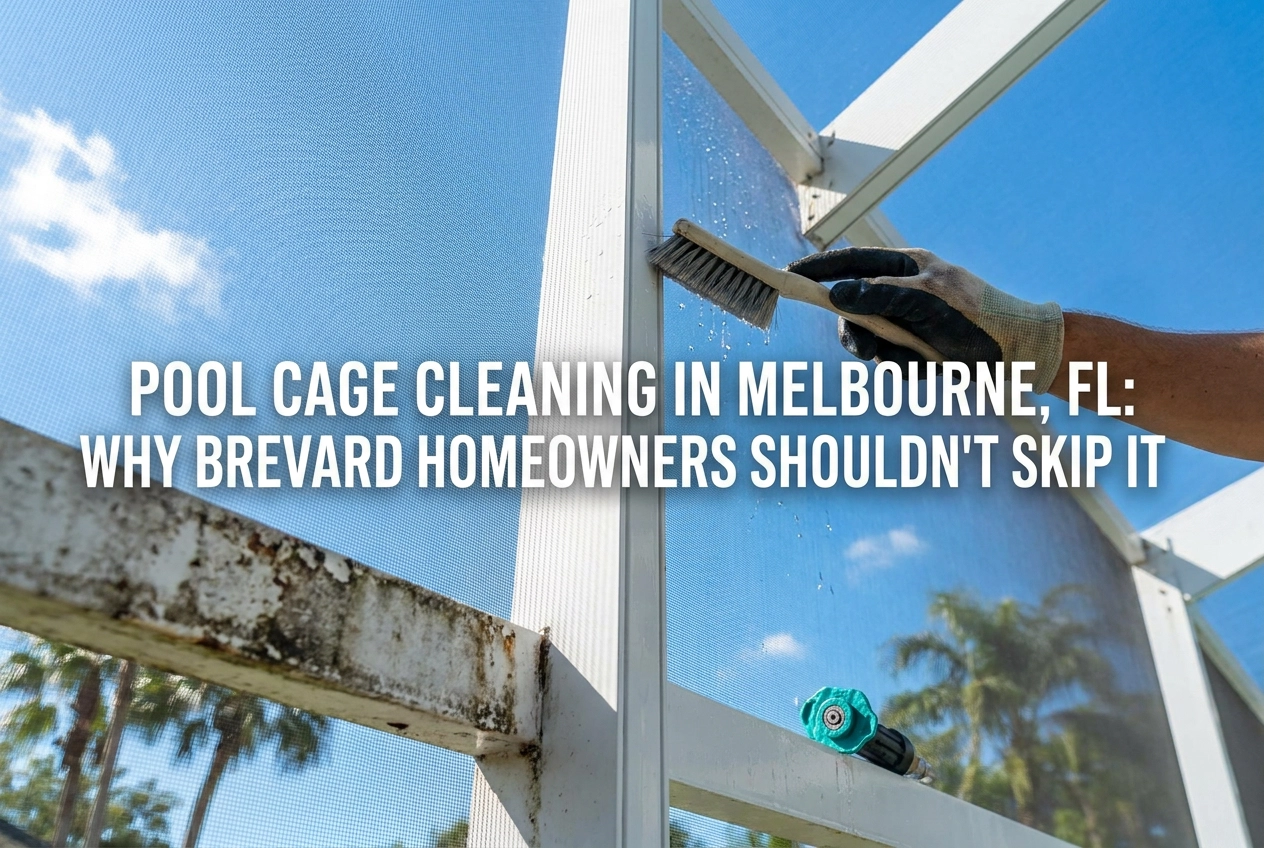
Most Melbourne homeowners think of their pool cage as a screen that keeps bugs out and leaves in. Clean it when it looks dirty, right? Not quite. What's actually happening to your pool cage frame is a lot more serious than a little green buildup, and by the time it's visible, the damage may already be underway.
Brevard County's mix of salt air, coastal humidity, and intense UV exposure creates conditions that actively break down aluminum pool cage frames year after year. And the scary part? You don't have to live on the beach for it to affect you. Homeowners miles inland are dealing with the same accelerated corrosion, whether they realize it or not.
This post is going to walk you through why pool screen enclosure cleaning is actually a structural maintenance task, not just a cosmetic one. You'll learn what salt, algae, and oxidation are doing to your frame right now, which parts fail first, what it costs to ignore the problem, and how to stay ahead of it with the right cleaning schedule. Let's dig in.
Brevard County's Environment Is Harder on Pool Cages Than Most Homeowners Realize
If you own a pool cage in Melbourne or anywhere else in Brevard County, your enclosure is fighting a battle you probably can't see.
Salt air isn't just a beachfront problem. Atmospheric salt particles travel inland on prevailing winds and settle on aluminum surfaces throughout the county, including neighborhoods miles from the coast. Your pool cage is collecting that salt whether your backyard faces the ocean or a retention pond.
Add Brevard's standing humidity to the picture and the problem compounds. Aluminum frames here rarely get a chance to fully dry out. That near-constant moisture exposure extends the wet-dry cycles that drive oxidation, month after month, year after year. It's the same process that makes exterior mold so much harder to control in Brevard County's climate compared to drier parts of the country.
Florida's UV intensity adds another layer. Over time, sunlight breaks down the anodized or painted coating on aluminum frames. Once that protective layer thins, the base metal underneath becomes directly exposed to everything else on this list.
Saltwater pool owners carry extra risk. Even though pool salt concentrations are well below ocean levels, splash and overspray add to the salt load already arriving from the air.
The result is a corrosion environment that is consistent, cumulative, and largely invisible. By the time most homeowners notice something is wrong, meaningful damage is already done.
What Salt, Humidity, and Algae Are Actually Doing to Your Frame
When salt particles land on aluminum and humidity moves in, the two form a thin, conductive film on the metal surface that enables electrochemical reactions. Research published in Nature Materials Degradation confirms that sodium deposits are a controlling factor in aluminum's atmospheric corrosion rate, and Brevard County delivers those deposits continuously.
Algae compounds the damage. A clean aluminum frame rained on in the morning is typically dry within a few hours. A frame coated in algae stays damp far longer, keeping that corrosive film active through cycles that would otherwise be interrupted by drying. This is why pool screen enclosure cleaning isn't cosmetic: the green or black film is holding moisture in place.
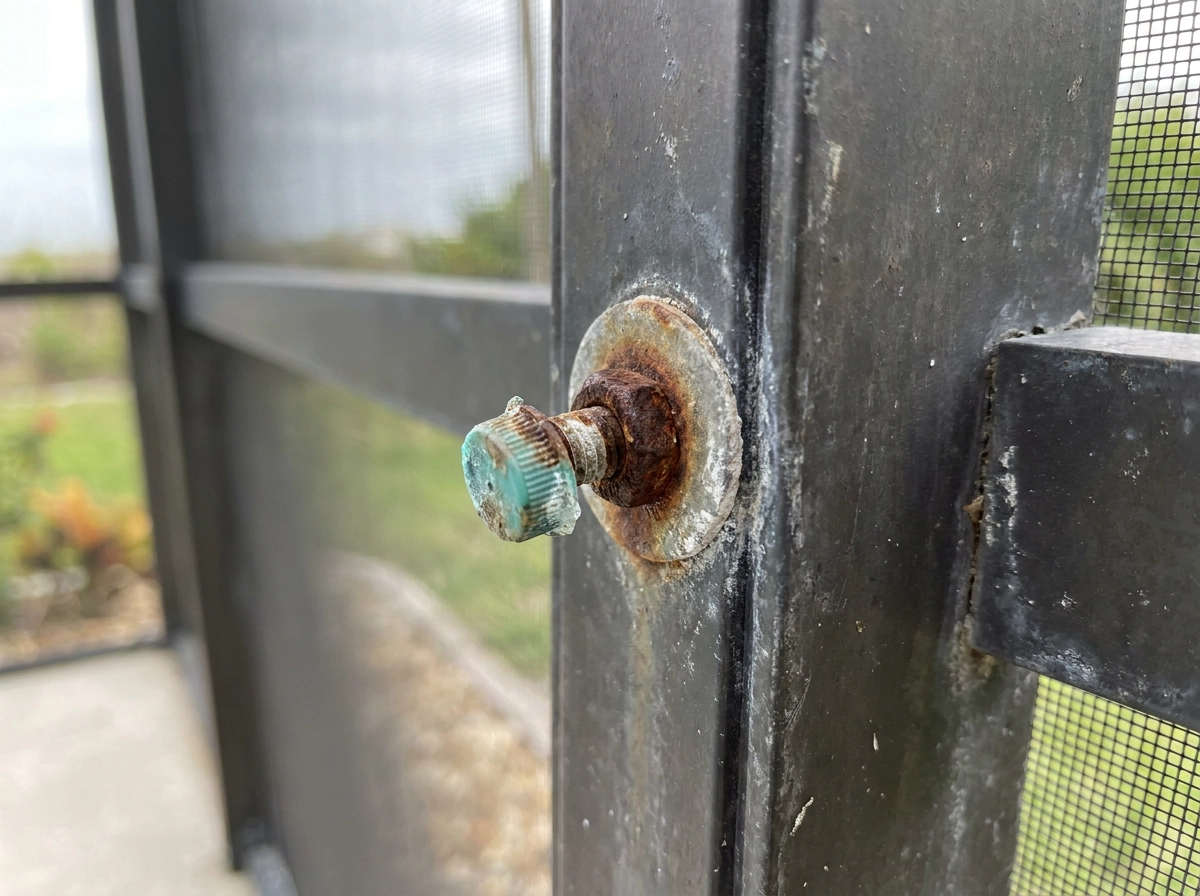
Fasteners are where the deterioration starts. Screws, bolts, washers, and brackets are often different metals than the aluminum frame, triggering galvanic corrosion wherever they contact. Their cut and drilled surfaces also have less protective coating coverage, making them the most exposed points on the structure.
Damage then works outward to cut ends of aluminum extrusions, bottom rails near the pool deck, and vertical members that collect runoff. These spots trap residue and stay wet longer than flat frame surfaces.
Rust-colored staining on any aluminum member signals active deterioration at or above that location and indicates the corrosion cycle is already underway. The same factors accelerate surface buildup on other exterior materials around your home for the same underlying reasons.
How Algae Buildup on a Pool Screen Enclosure Becomes a Structural Problem
Most homeowners who notice a green or black film on their pool cage think about one thing: it looks bad. That's understandable. But the appearance is the least important part of what's happening. The real problem is what that biological layer is doing to the aluminum underneath it.
A clean aluminum frame gets wet when it rains and dries out within a few hours. A frame coated in algae, mold, or biological growth stays wet for much longer, because that layer holds moisture against the metal surface. Longer wet periods mean more corrosion exposure time per rain event, and Brevard County gets a lot of rain.
The damage doesn't show up after one storm. It builds quietly, month after month, as each extended wet cycle pushes oxidation a little further along than it would have gone on a clean frame. After one to three years, that compounding effect becomes visible, usually right around the fasteners and bottom rails covered in the previous section.
The screen mesh isn't immune either. Biological growth weakens screen fibers over time, degrading UV resistance and insect protection. That shortens how long the mesh lasts before it needs replacing, which is a cost most homeowners don't connect back to a cleaning they skipped two years earlier. Why Melbourne homes get dirty faster than most is worth understanding, because the same conditions driving surface grime are driving this process too.
Professional screen enclosure cleaning removes the biological layer and breaks the cycle. Clean frames dry faster, oxidize slower, and hold their protective coating longer.
The Parts of Your Pool Cage That Fail First (And Why)
Knowing where corrosion starts helps you understand why regular cleaning matters so much. The damage doesn't appear randomly. It follows a predictable pattern, hitting the same locations first on nearly every enclosure.
Bottom rails and lower horizontal members take the hardest hits. They sit directly in the splash zone, collect runoff from the entire frame above them, and hold salt-laden moisture that concentrates further as it evaporates. If you're going to find active corrosion somewhere on your cage, start low.
Fastener points are next, and they're the ones that matter most structurally. Every screw hole, bracket, and joint combines three corrosion accelerators at once: exposed base metal where the drill broke through the coating, dissimilar metals in contact, and tight crevice geometry that traps moisture and holds it long after the frame surface has dried. A corroding fastener can hollow out a connection point while looking like minor surface discoloration from the outside.
That last part is what makes it dangerous. When steel fasteners corrode inside an aluminum frame, the reaction is electrochemical, not just surface rust. The structural integrity degrades before the visual warning catches up. Once that corrosion spreads from the fastener into the surrounding frame member, the connection holding your screen panel in place under wind load is compromised. That's when a maintenance problem crosses into repair territory.
Pool cage doors are a specific weak point that often gets overlooked. Every time the door opens and closes, the hinge and latch points flex slightly, creating micro-abrasions in the protective coating. Those small breaks give corrosion a consistent, recurring entry point that gets worse with every use.
The Real Cost of Skipping Pool Cage Maintenance in Brevard County
Aluminum pool cages in Florida are built to last 10 to 20 years, but that range assumes reasonable care. A Melbourne cage cleaned regularly can hit the top of that range or exceed it. A neglected one in the same neighborhood, exposed to the same salt air and humidity, can need partial rescreening or structural repairs years earlier, sometimes shaving off an entire replacement cycle.
The cost gap is significant. Professional screen enclosure cleaning runs in the hundreds of dollars. Rescreening a full enclosure in Brevard County costs meaningfully more. Full frame replacement, depending on cage size and corrosion extent, can reach several thousand dollars or higher. Those figures reflect what happens when deferred maintenance turns into a structural repair conversation.
Corrosion earns that gap quietly. Most homeowners look at their cage, see it standing upright, and assume it's fine. By the time rust staining, loose screen panels, or a misaligned door makes the damage undeniable, corrosion has already spread well beyond its starting points at the fasteners and bottom rails.
Early-stage issues caught during a routine cleaning visit are manageable. The same issues caught two or three years later, after spreading to adjacent frame members, are not.
The financial case for annual or biannual cleaning isn't about appearance. It's about catching the problem at the point where a cleaning visit solves it, before it becomes a rescreening or replacement job. The same logic applies to other exterior maintenance; how often you clean your windows in Brevard County follows a similar preventive rhythm, where staying ahead of buildup protects the material underneath.
Why DIY Cleaning Can Make Corrosion Worse
The instinct to grab a pressure washer makes sense. The cage looks dirty and high pressure feels thorough. The problem is that aluminum frames rely on an anodized or painted coating as their primary defense against oxidation. High-pressure water can strip that coating, leaving bare aluminum exposed to salt air and humidity. Pressure washing also forces water into fastener recesses and frame joints, exactly the locations most vulnerable to corrosion, where it continues working long after the surface appears dry.
Chemical choices matter just as much. Bleach at high concentrations, acid-based cleaners, and abrasive compounds can react with aluminum and accelerate oxidation. This is especially true at cut ends and drilled fastener holes, where the base metal has the least coating protection. The same logic applies to roof surfaces, where high-pressure or harsh chemistry trades short-term results for long-term damage.
Professional pool screen enclosure cleaning uses low-pressure soft wash methods and solutions formulated specifically for aluminum and screen mesh. Biological growth and salt deposits come off without compromising protective coatings or driving moisture into joints.
There is also an inspection element DIY cannot replicate. A professional visit includes examining fastener points, bottom rails, and connection joints for early-stage corrosion while it is still minor and manageable. That early-warning value is most of what makes professional cleaning a structural maintenance investment rather than just a cleaning expense.
How Often Should You Clean Your Pool Cage in Melbourne, FL?
For most Brevard County homeowners, annual cleaning is the baseline. A full 12-month cycle of salt air, standing humidity, and biological growth is enough time for meaningful corrosion to establish itself at fasteners and cut ends. Waiting longer means playing catch-up with damage already in progress.
Twice-yearly cleaning makes sense if any of these apply to your home:
You're within a few miles of the Intracoastal Waterway or Indian River
You have a saltwater pool
Your enclosure already shows surface oxidation
Your cage is more than five years old and has never had a professional cleaning
Late spring and late fall are the most strategic windows in Brevard County. Late spring gets your cage cleaned before peak humidity and storm season. Late fall addresses everything that built up over summer. Those two intervals bracket the highest-intensity corrosion periods of the year, similar to how window cleaning frequency in Florida follows the logic of working around weather exposure cycles.
Don't wait for the scheduled date if you're seeing these warning signs:
Green or black algae on the mesh or frame
Any rust-colored staining on aluminum members
Screen panels that look loose or are beginning to sag
Those are signals a cleaning is overdue and that a professional inspection should happen alongside it.
A recurring maintenance schedule is the easiest way to stay on top of this. Small issues get caught early, you're not trying to remember to rebook every year, and your cage goes into each humid season in the best shape possible.
Pool Cage Cleaning in Melbourne and Brevard County from Seatown Window & Wash
If you've read through the corrosion mechanics and decided it's time to get on a regular cleaning schedule, here's who to call.
Seatown Window & Wash is a Melbourne-based, owner-operated exterior cleaning company founded by Seaton, a local entrepreneur who grew up in Brevard County and works these neighborhoods personally. Every job gets hands-on attention, not a crew you've never met.
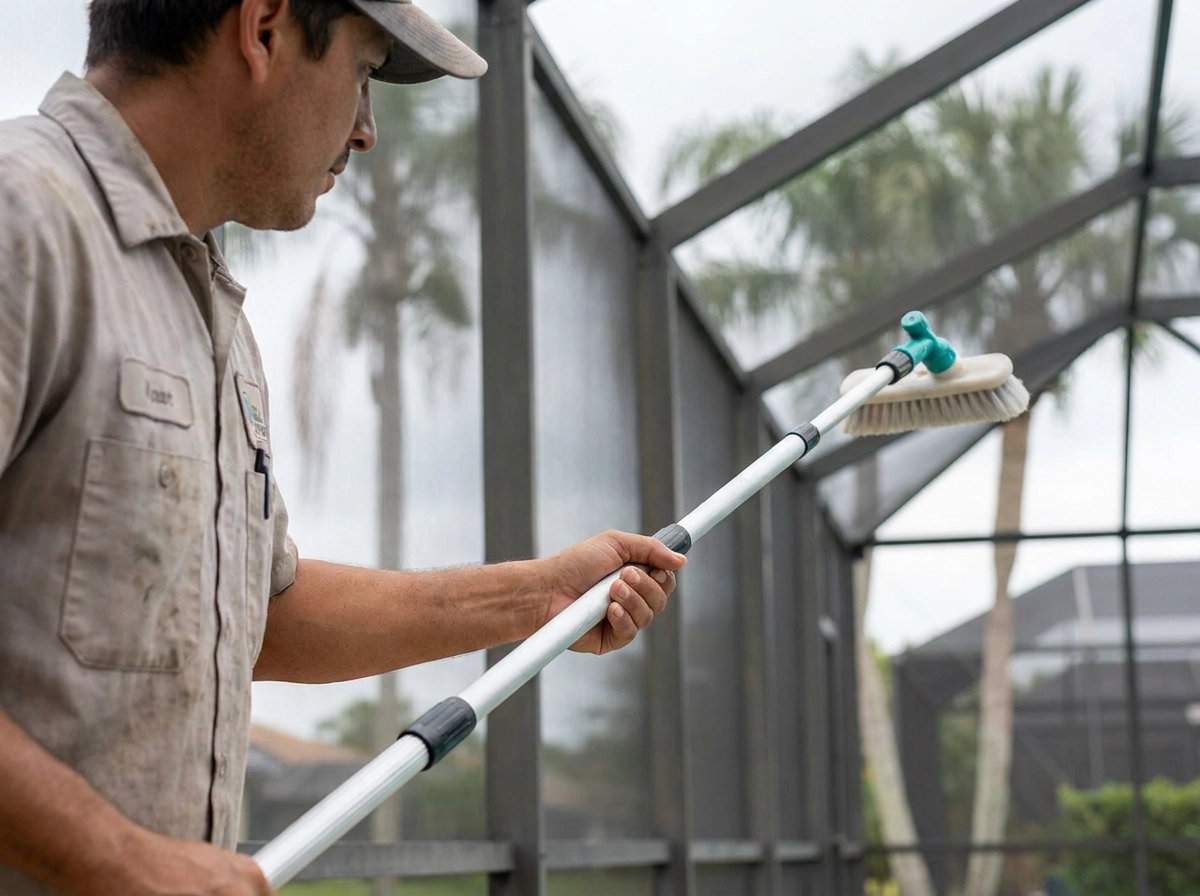
Pool cage and screen enclosure cleaning is performed using soft wash methods: low pressure, chemistry formulated for aluminum and screen mesh, and deliberate attention to the spots that fail first, including fastener locations, bottom rails, and connection points.
Being local isn't just a tagline here. Knowing that a home near the Intracoastal faces different conditions than one in west Viera, and understanding how Brevard's summer humidity and UV intensity stack on top of coastal salt exposure, shapes how the work actually gets done. This isn't a process designed for a drier or less demanding climate.
Seatown is licensed and insured. Every quote is transparent and upfront, with no surprise add-ons at the end. Recurring annual or biannual maintenance schedules are easy to set up so homeowners in Melbourne, Palm Bay, Viera, Rockledge, and surrounding areas don't have to rebook from scratch each season.
For homeowners who also want to keep up with how Seatown Window & Wash handles gutter cleaning in Melbourne and Brevard County, that service pairs well with a pool cage visit.
Reach out for a free quote. The earlier you start, the more lifespan you protect.
Your Pool Cage Is a Structural Asset, Treat It Like One
The bottom line is straightforward: in Brevard County, your pool cage is not a decorative feature. It is a structural aluminum system being worked on continuously by salt air, humidity, and biological growth. That process does not pause between cleanings.
The corrosion chain is slow and predictable. Salt settles on the frame, algae holds moisture against the metal, fasteners begin to deteriorate, and the damage spreads outward from there. None of it is visible in the early stages, which is exactly why so many homeowners don't catch it until the cost has already climbed. The encouraging part is that predictable also means preventable.
Annual or biannual professional cleaning interrupts that chain at the point where it is still cheap to address. A cleaning visit removes the biological growth, clears the salt deposits, and lets a trained eye flag early corrosion at fasteners and bottom rails before those small issues become structural ones. That is the intervention point you want. Once corrosion spreads to adjacent frame members, you are no longer talking about a cleaning bill.
If your cage hasn't been professionally cleaned in the past year, or if you're noticing rust staining, algae buildup, or any loose screen panels, those are signs to act now rather than wait. For more on what that decision looks like financially, The Bottom Line for Brevard County Homeowners breaks it down clearly.
Seatown Window & Wash offers free quotes for pool cage and screen enclosure cleaning throughout Brevard County. Reach out today and protect what you have.
Conclusion
Your pool cage is not a passive structure. It is an investment being tested daily by salt air, humidity, and biological growth that most homeowners never see until the damage is already expensive.
The key takeaways from this guide are straightforward. Brevard County's coastal environment accelerates corrosion faster than most regions. Algae and salt work together to compromise frames, fasteners, and screen panels from the inside out. Professional cleaning interrupts that cycle before it becomes structural. And the cost of prevention is always lower than the cost of repair.
If your enclosure has gone more than a year without a professional cleaning, now is the right time to change that. Seatown Window & Wash serves homeowners throughout Melbourne and Brevard County with expert pool cage cleaning and free quotes. Reach out today, protect your investment, and get ahead of the damage before it gets ahead of you.