If you have noticed dark streaks, fuzzy green patches, or black spots spreading across your siding, roof, or exterior walls, you are not alone. Florida's heat and humidity make Brevard County homes especially vulnerable to mold growth, and it can show up faster than you might expect.
The good news is that exterior mold removal cleaning does not have to be an overwhelming project. With the right knowledge and a little guidance, you can tackle this problem confidently, even if you have never dealt with it before.
In this guide, we are going to walk you through everything a beginner needs to know. You will learn how to identify different types of exterior mold, understand why Brevard County homes are particularly prone to it, and discover the safest and most effective cleaning methods available. We will also cover when it makes sense to handle the job yourself versus when it is time to call in a professional.
By the end, you will have a clear, step-by-step plan to get your home looking clean and protected again. Let's get started.
What You're Actually Seeing on Your Siding, Roof, or Driveway
If you've noticed dark streaks running down your roof, fuzzy green patches creeping up your siding, or black staining spreading across your driveway, you're not alone, and it's not just dirt. Here in Brevard County, Florida's heat, humidity, and near-daily summer rain create the perfect recipe for biological growth on just about every exterior surface of your home. Knowing what you're actually looking at is the first step toward fixing it.
Those Black Streaks on Your Roof
Those dark, almost sooty streaks running from your roof ridge down toward the gutters are almost never dirt or weathering. They are almost always caused by Gloeocapsa magma, a type of algae (technically a cyanobacterium) that feeds on the limestone filler used as a weighing agent inside asphalt shingles. The organism thrives in exactly the kind of environment we have here in Melbourne, where outdoor humidity routinely exceeds 80% and temperatures stay warm year-round. Left untreated, this algae doesn't just look bad; it gradually consumes the shingle material itself, shortening the life of your roof over time.
Fuzzy Patches on Siding, Stucco, and Fencing
Green or gray fuzzy patches on your vinyl siding, stucco walls, or wood fence are typically mildew or early-stage surface mold colonies. According to the U.S. EPA's guide to mold and moisture, mold can begin establishing itself within just 24 to 48 hours of moisture contact, meaning even a brief rainstorm is enough to kick things off on a shaded wall. North-facing or tree-shaded surfaces are especially vulnerable because sunlight never gets the chance to dry them out fully.
Driveway and Pool Deck Staining
Dark staining on concrete driveways, sidewalks, and pool decks is usually a layered problem. Florida averages nearly 56 inches of rainfall per year, which repeatedly saturates porous horizontal concrete surfaces and gives algae, mildew, and decomposing organic matter like leaf tannins and pollen a consistent source of moisture to feed on. The result is that blotchy, grayish-black staining that seems to spread and darken every rainy season.
Window Frames, Soffits, and Fascia Boards
These spots are easy to overlook, but they are often the first places on your home where biological growth appears. Soffits and fascia boards sit right at the eave line where roof runoff, trapped humidity, and low airflow combine into ideal growing conditions. The Florida Department of Health recognizes mold as a legitimate public health concern statewide, and that starts with catching it early on exterior surfaces before it works its way inward. What homeowners often dismiss as weathered paint or grime is frequently early mold discoloration worth addressing.
Algae, Mildew, or True Mold: Does the Difference Matter?
Practically speaking, the distinction helps you describe what you're seeing when you call for a quote. Algae on your roof tends to look like smooth, dark streaks running with the water lines. Mildew usually appears as flat, powdery patches in white, gray, or light green. True mold colonies are often fuzzy or raised, in darker shades of green, brown, or black, and may indicate deeper penetration into porous materials like wood siding or fascia boards. The good news is that all three are treated the same way professionally: soft washing with the right solution removes the organism at the source rather than just masking it.
Exterior Surface Mold vs. Interior Mold: Why the Difference Matters
Now that you know what's actually growing on the outside of your home, here's something worth understanding before you pick up the phone and call anyone: not all mold problems are the same, and calling the wrong type of professional can cost you significantly more than necessary.
Exterior surface mold grows on the outer materials of your home, things like vinyl siding, roof shingles, concrete driveways, window frames, and wood fences. It sits on the surface, feeding off moisture, organic debris, and Florida's relentless humidity. Because it's a surface issue, it's addressed through professional surface cleaning, specifically soft washing, which uses low-pressure water and biodegradable cleaning solutions to break down and remove biological growth without damaging your home's materials. There's no structural work involved, no licensed remediation contractor needed, and no complicated process to navigate.
Interior mold is a completely different situation. When mold colonies take hold inside walls, under flooring, in ceiling cavities, or inside your HVAC system, that's regulated work in Florida. Under Florida Statute Chapter 468, the state requires two separate licenses for this type of work: a Mold Assessor (MRSA) license to inspect and test, and a Mold Remediator (MRSR) license to actually remove it. Here's the part that protects you as a homeowner: Florida law prohibits the same company from holding both licenses on the same property. The person who tests for the mold cannot be the company that removes it. This separation exists specifically to prevent financial conflicts of interest, so nobody profits from finding more mold than is actually there. You can learn more about how to choose a mold removal company after an independent assessment to understand what that process looks like.
Exterior soft washing falls completely outside Florida's mold remediation licensing statutes. It's a routine cleaning service, the same category as window cleaning or gutter cleaning, with no regulatory complexity on your end. You schedule it, we show up, and your home looks clean again.
The real-world mistake Brevard County homeowners make is seeing dark staining on their siding or roof, assuming the worst, and immediately calling a licensed remediation company. Interior remediation projects can run anywhere from $1,200 to over $10,000 depending on scope. If what you're actually dealing with is surface mold or algae staining on the outside of your home, a professional soft wash is a fraction of that cost and completely resolves the issue. Understanding this distinction genuinely saves you money, time, and a lot of unnecessary stress.
Why Brevard County's Climate Makes Exterior Mold So Much Worse
If you live in Melbourne or anywhere along the Space Coast, you've probably noticed that mold, algae, and mildew seem to come back faster here than they do for friends or family living in other parts of the country. That's not your imagination. Brevard County's geography and climate create conditions that are genuinely harder on exterior surfaces than almost anywhere else in Florida.
Sandwiched Between Two Bodies of Water
Melbourne sits between the Atlantic Ocean to the east and the Indian River Lagoon to the west, and that positioning matters more than most homeowners realize. Those two water bodies create a microclimate where damp air is almost constantly being pushed across the area from one direction or the other. Salt air from the coast degrades the sealants, paint, and surface materials on your home faster than dry inland air would, and once those surfaces are compromised even slightly, mold and algae find it much easier to take hold. Homes closer to the beach or the lagoon in areas like Satellite Beach, Cape Canaveral, or Indialantic tend to see biological growth develop faster than properties further inland.
Rain Season Keeps Surfaces Wet for Months
From June through September, Brevard County gets hit with near-daily afternoon thunderstorms. Those storms don't just wet your siding and driveway; they also deposit pollen, leaf debris, and organic particles that serve as a food source for algae and mildew colonies. By the time the surface starts to dry, another storm rolls through and the cycle resets. According to local remediation professionals familiar with the Space Coast market, Florida's humidity, summer rainfall, and tropical weather create conditions where biological growth on exterior surfaces can develop and spread remarkably quickly during these months.
No Winter Reset Like Other Climates Get
Homeowners who moved to Brevard from northern states sometimes assume that cooler months will slow things down. They don't, at least not enough to matter. Mold and algae generally stay active above 40 degrees Fahrenheit, and Melbourne rarely dips anywhere near that threshold. There's no hard freeze to kill off developing colonies the way a Wisconsin or Michigan winter would. That means exterior mold on your roof, siding, or driveway is a genuine 12-month concern, not a seasonal one you can put off until spring.
Hurricane Season Adds Another Layer of Risk
From June through November, hurricane season overlaps directly with the rainy season, and storms create a specific problem that goes beyond surface wetness. Wind-driven rain during even a moderate storm can force moisture into hairline cracks in stucco, behind window frames, and into areas of your exterior that wouldn't normally absorb water. If a surface was already developing a mold or algae colony before a storm event, that added moisture intrusion can accelerate growth significantly in the days and weeks that follow. Local mold damage professionals serving Southwest Brevard County offer 24/7 response specifically because post-storm moisture problems move fast.
The bottom line is that living here means your home's exterior is under near-constant biological pressure. Cleaning it once and hoping for the best isn't a realistic strategy. Understanding why growth happens this quickly in Brevard County is the first step toward actually staying ahead of it.
The Right Way to Remove Exterior Mold: Why Soft Washing Works
So now that you understand what's growing on your home and why Florida's climate makes it worse, the next logical question is: what actually gets rid of it for good? The answer is soft washing, and once you understand how it works, you'll see why it's the only method that makes real sense for exterior biological growth.
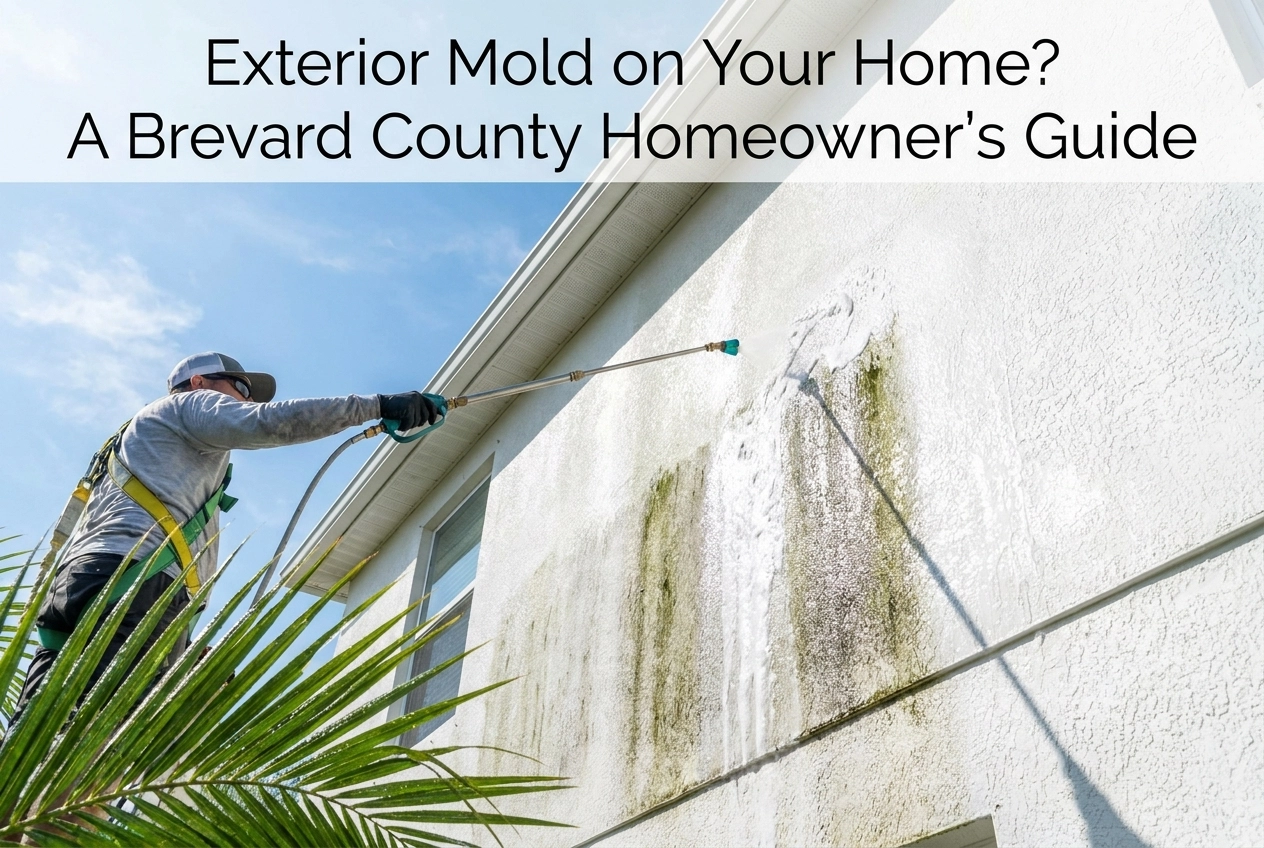
Soft washing works by combining low water pressure with professional-grade cleaning solutions, typically a sodium hypochlorite blend, to kill mold, algae, and mildew at the biological root level. Rather than blasting visible staining off the surface with brute force, the cleaning chemistry does the actual work. It penetrates the growth, kills the organism, and then gets rinsed clean. According to the experts at ClearWave on how soft washing prevents algae and mold, this approach targets biological growth at the source rather than simply dislodging what's visible on the surface.
Why Pressure Washing Alone Doesn't Cut It
Here's something a lot of homeowners don't realize: grabbing a pressure washer and blasting your siding clean does not kill mold. It removes the stain you can see, but the root structure of the organism stays behind in the surface material. In Florida's warm, humid climate, that's basically an open invitation for the growth to come back fast, sometimes within just a few weeks. High-pressure water can also cause real damage to your home in the process; it can crack stucco, strip paint, and force water behind siding panels, which creates exactly the kind of moisture buildup that accelerates future mold growth.
The Right Tool for the Right Surfaces
Soft washing is also the only safe choice for many common exterior surfaces. Vinyl siding, painted wood, stucco, screen enclosures, and older roof shingles are all surfaces that cannot handle high pressure without risking damage. Because soft washing operates at very low pressure, usually under 500 PSI compared to the 1,500 to 3,000 PSI typical of pressure washing, it cleans thoroughly without stripping coatings or cracking materials.
Professional equipment also applies the cleaning solution at consistent, controlled concentrations that a rented pressure washer simply cannot replicate. The solution ratios matter; too weak and the treatment is ineffective, too strong and it can stress surrounding landscaping. A trained technician knows how to dial that in correctly and rinse the surface properly so that dead mold matter is fully removed, not just killed in place.
The result is a cleaner surface that stays cleaner for significantly longer because the biological growth has been eliminated rather than displaced. That means fewer treatments over time and better protection for your home's exterior surfaces, which makes soft washing the smarter, more cost-effective choice in the long run.
What Does Exterior Mold Cleaning Actually Cost?
Let's talk numbers, because this is where the math gets pretty hard to argue with.
A professional exterior soft wash for a typical Brevard County home generally runs in the range of a few hundred dollars, with most residential jobs falling somewhere between $300 and $700 depending on the square footage, the type of surfaces being cleaned, and how much biological buildup has accumulated. Homes with heavier mold and algae growth from years of deferred cleaning may run toward the higher end, but for most homeowners who stay on top of maintenance, it's a manageable, predictable cost.
Licensed interior mold remediation tells a very different story. According to 2026 industry cost data from The Basement Guide, professional interior remediation typically runs between $1,500 and $9,000 for most residential projects, with larger structural jobs reaching $7,000 to $15,000 or more. SERVPRO's national cost resource puts the average at roughly $2,368, and that doesn't include pre-remediation testing or post-clearance inspections, which can add another $500 to $1,000 on top.
The preventive math is straightforward. One or two exterior soft washes per year removes the mold, algae, and moisture conditions on your siding, roof, and surfaces before they have any chance to contribute to interior moisture problems. That's a few hundred dollars a year versus a potential four-figure remediation bill.
Deferred cleaning also compounds in another way. Mold and algae that are allowed to build up over multiple years don't just look bad; they can degrade siding, stain painted surfaces permanently, and accelerate material breakdown to the point where repainting or siding replacement becomes necessary. Those repair costs stack directly on top of the cleaning cost, turning a simple maintenance task into a much larger project.
The easiest first step is just getting a free quote. There's no obligation, no surprise charges, and no commitment required. It simply gives you a clear, accurate number for your specific home so you can make an informed decision. Reach out to Seatown Window and Wash and we'll come take a look.
When to Stop Cleaning and Call a Licensed Mold Remediator
There is a clear line between exterior surface cleaning and interior mold remediation, and it is important that every Brevard County homeowner understands where that line sits before any work begins.
If you are noticing mold on interior walls, ceilings, or inside closets, or if there is a persistent musty odor inside your home that does not go away, that is not a soft washing situation. That is a signal to contact a licensed mold assessor right away. Exterior cleaning companies work on the outside of your home. What is happening inside your walls is an entirely different scope of work.
Water intrusion events make this especially urgent. A roof leak, storm flooding, or a plumbing failure can create active mold growth conditions within 24 to 48 hours. During an active hurricane season like the one Brevard County is navigating right now, that window closes fast. If your home took on water, do not wait to see if something grows. Call a licensed Florida MRSR-credentialed remediator promptly.
Florida's AC systems are also one of the most commonly overlooked mold sources in the state. If the air coming from your vents smells musty, that is a reason to call a certified inspector, not a pressure washing company.
Exterior cleaning companies are not mold assessors. If there is any question about whether mold has moved into a wall cavity or penetrated a building material, a licensed Florida mold assessor should evaluate the situation before any cleaning work begins. For genuine interior mold concerns, contact a company holding Florida MRSR credentials. That work requires specialized containment, air filtration, and removal protocols that are built for exactly that purpose.
How Often Should Brevard County Homes Be Cleaned to Prevent Mold?
So what does a realistic cleaning schedule actually look like for a home here in Brevard County? The short answer is more frequent than most homeowners expect, but easier to manage than you might think once you have a plan in place.
For most homes in Melbourne and throughout Brevard County, a professional exterior soft wash at least once per year is a reasonable baseline. Homes with heavy tree canopy overhead, walls that face north and stay shaded most of the day, or properties near the Indian River Lagoon or local canals should honestly be looking at twice per year. Those conditions keep surfaces wetter for longer, and mold does not need much of an invitation in this climate.
Roofs deserve their own schedule. A one-to-two year cleaning cycle is what most Melbourne-area homes need to stay ahead of Gloeocapsa magma, the algae responsible for those black streaks spreading across asphalt shingles. Beyond looking bad, untreated algae growth can actually void some manufacturer warranties on shingles if left unaddressed long enough.
Driveways, pool decks, and concrete surfaces are a year-round situation in Florida. Biological growth builds up fast here, and the stretch right after summer rainy season is typically when things look the worst. An annual cleaning keeps those surfaces safe, presentable, and structurally sound.
One thing that makes all of this much easier is a recurring maintenance plan. When cleanings are scheduled in advance, surfaces never reach that severe buildup stage. That means each visit is faster, less intensive, and more affordable than a one-time deep clean on a badly neglected surface. It also extends the life of your siding, paint, and concrete finishes.
Finally, after hurricane season closes out each year, a post-storm exterior cleaning is worth adding to the list. Extended wet conditions, organic debris pressed against siding and rooflines, and disrupted drainage create a concentrated window for mold to take hold. Treating that as its own maintenance event, rather than waiting until your next scheduled cleaning, keeps small problems from turning into bigger ones. According to exterior cleaning experts in Florida, hurricane season debris and prolonged moisture are among the most significant environmental stressors for home exteriors in the state.
If you're not sure where your home falls on this schedule, Seatown Window & Wash is happy to take a look and give you an honest recommendation. No pressure, no guesswork, just a straightforward assessment from someone who cleans homes in this county every week.
Get a Free Quote from a Local Melbourne Exterior Cleaning Company
Seatown Window and Wash is a locally owned and operated exterior cleaning company founded right here in Melbourne by Seaton, a Brevard County native who started this business after noticing how many homes throughout the area were quietly losing curb appeal and material integrity to exterior mold, mildew, and algae buildup that most larger companies simply rush past or overlook.
Services include professional house soft washing, roof cleaning, pressure washing, window cleaning, gutter cleaning, and screen cleaning. Every single job is performed by the owner himself, using professional-grade equipment and a genuinely detail-oriented approach. You are not getting a rotating crew of subcontractors. You are getting the person who built this business and cares about the results.
Seatown is fully licensed and insured, and every quote comes with straightforward, honest pricing and no hidden fees. You will know exactly what the work involves and what it costs before anything gets scheduled.
When you reach out, you are talking directly to Seaton, the same person who will show up at your home and do the work. No call centers, no franchise dispatchers, no middlemen.
Homeowners throughout Melbourne, Palm Bay, Merritt Island, Viera, and the surrounding Brevard County area are welcome to request a free, no-obligation exterior cleaning quote today. Reach out and let's get your home looking its best again.
The Bottom Line on Exterior Mold Removal for Florida Homeowners
Living in Brevard County, exterior mold, algae, and mildew are not signs that you are doing something wrong. They are simply the result of living in one of the most humid, warm, and water-adjacent environments in the country. Florida does not give mold much of a choice, and neither do you.
Professional soft washing is the right tool for the job. It kills biological growth at the root rather than just pushing it around, and results typically last two to five years compared to six to twelve months with pressure washing alone. Knowing the difference between surface mold on your siding and structural mold inside your walls helps you make the right call, whether that means booking a soft wash or contacting a licensed Florida mold remediator.
Preventive exterior cleaning is also one of the smartest financial decisions a homeowner in this area can make. A routine soft wash costs a fraction of what interior remediation runs, and it keeps small problems from becoming expensive ones.
If your home is overdue for a cleaning, the easiest next step is a free quote from a local, owner-operated company that actually knows Brevard County homes. Seaton and the Seatown Window and Wash crew treat every job with the same attention to detail, whether it is a routine wash or a full exterior refresh.
Conclusion
Exterior mold does not have to take over your Brevard County home. By learning to identify mold early, understanding why Florida's climate creates the perfect conditions for growth, and choosing the right cleaning approach, you can protect your home before the damage becomes serious. Knowing when to handle the job yourself and when to bring in a professional is just as important as the cleaning itself.
Your home is one of your biggest investments, and keeping it mold-free is a key part of protecting that value.
Ready to take action? Start by walking your property today and noting any suspicious spots on your siding, roof, or walls. The sooner you address the problem, the easier and less costly the solution. A clean, healthy exterior is absolutely within reach.