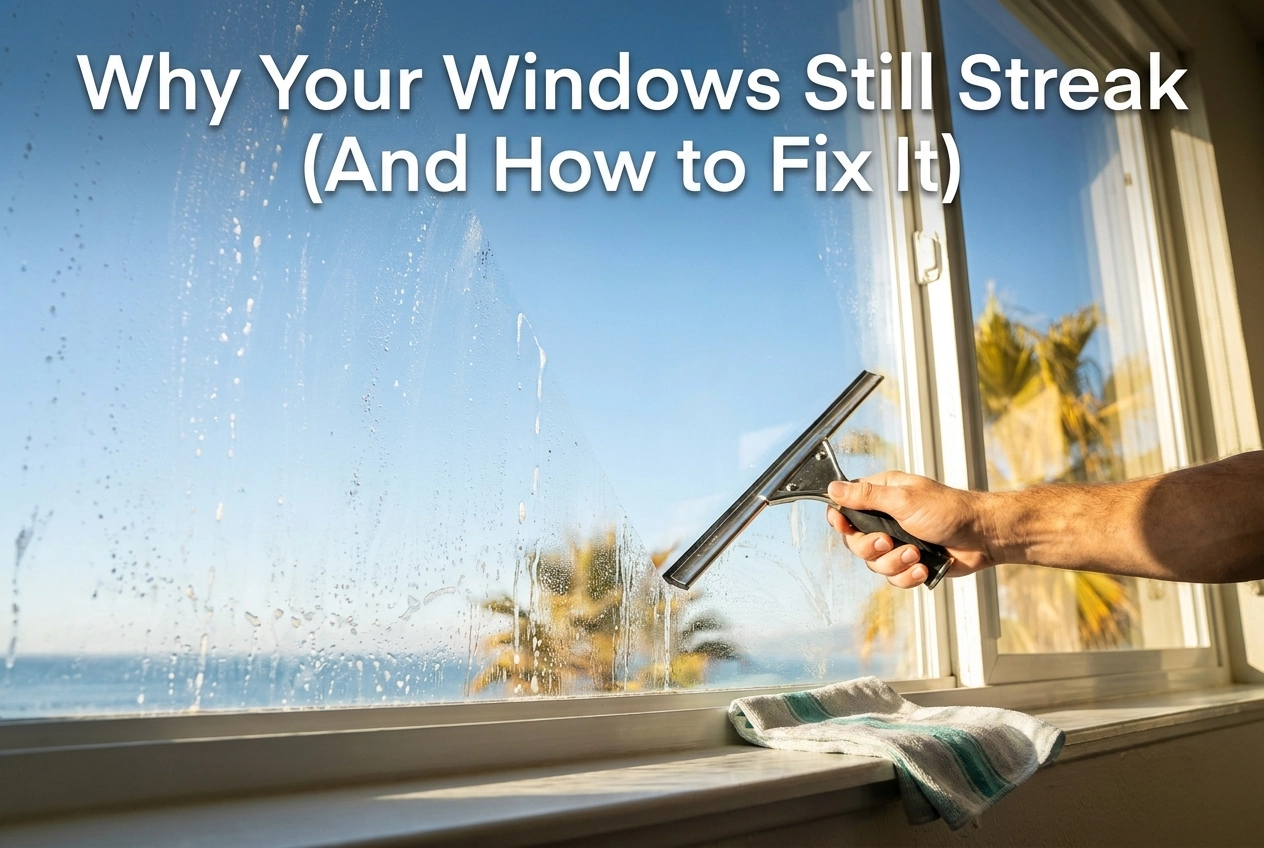
You grab your paper towels, spray on your favorite cleaner, and wipe down the windows with confidence. But then the sun hits the glass and, suddenly, all you see are streaks running everywhere. Sound familiar? You are definitely not alone in this frustration.
Here is the truth: getting crystal clear windows is not just about spraying and wiping. There is actually a bit of technique involved, and most people are unknowingly making a few small mistakes that lead to those annoying smears every single time.
The good news is that finding a streak free window cleaner and learning how to use it correctly is much easier than you might think. In this guide, we are going to walk through exactly why streaks happen in the first place, which products and tools actually work, and the simple step-by-step method that will leave your windows sparkling clean. Whether you have never cleaned windows before or you have just never been happy with the results, this post will give you everything you need to finally get it right.
Why Your Windows Streak in the First Place
Before you can fix streaky windows, it helps to understand why they happen in the first place. Most people assume it's the cleaning product, but honestly, the bottle is rarely the problem. The real culprits are a little less obvious, and if you're a homeowner here in Melbourne or anywhere in Brevard County, a few of these factors hit harder for you than they do for people in other parts of the country.
Tap Water Is Working Against You
The single most overlooked cause of streaking is dissolved minerals in your tap water. Water looks completely clear coming out of the hose, but it carries calcium and magnesium along with it. When that water hits your glass and evaporates, those minerals don't go anywhere. They stay behind as a white, hazy residue that becomes more visible every time the sun hits it at the right angle. Over time, those light spots layer on top of each other and turn into a stubborn cloudy film that regular cleaning just smears around.
This is a particularly big deal for homeowners in Brevard County. Florida's well water is notoriously high in calcium and magnesium, and hard water stains on residential windows are one of the most common complaints professionals deal with in this region. If your sprinkler system pulls from a well, those heads are spraying mineral-rich water directly onto your glass every week, making the problem worse with every cycle.
Timing and Tools Matter More Than You Think
Here in Florida, cleaning windows on a bright, sunny afternoon feels natural, but it's actually one of the worst times to do it. Warm glass causes your cleaning solution to dry before you can wipe it away, leaving product residue behind instead of a clean surface. Overcast mornings or shaded sides of the house are genuinely better conditions, not just a suggestion.
Your cloth matters just as much as your timing. Paper towels shed lint directly onto the glass, and a cloth that has already absorbed grease or old cleaning product will redistribute that residue right back across the surface you're trying to clean. A fresh, clean microfiber cloth isn't optional; it's the whole difference between a streak and a clear pane.
Living on the Coast Adds an Extra Layer
If you live near the water in Brevard County, you're dealing with something inland homeowners simply aren't. Salt air and coastal humidity settle onto exterior glass constantly, creating a thin, sticky film that grabs onto dust and grime faster than glass in a non-coastal area. According to professional guidance on hard water and exterior glass, this kind of repeated environmental exposure accelerates soiling and means your windows need attention more frequently than the average home. It's not that you're doing anything wrong; it's just the reality of living somewhere this close to the Atlantic.
The Right Tools Make More Difference Than the Product
Here's something that might save you from buying yet another bottle of window spray: Consumer Reports evaluated nine popular glass cleaners and found that virtually all of them cleaned glass effectively. The difference between a frustrating, streaky result and a clean, clear pane almost never comes down to the formula. It comes down to what you're doing with it.
The single biggest upgrade most homeowners can make is switching from paper towels to microfiber cloths. Paper towels shed micro-fibers, push dissolved residue around the surface, and leave more mess than they remove. A good microfiber cloth absorbs moisture, traps dust and grime, and lifts it cleanly away from the glass without smearing. A simple two-cloth method, one slightly damp and one dry for buffing, covers most interior windows without any product at all.
For exterior windows, a quality squeegee is the tool that actually makes the difference. Professional window cleaners rely on squeegees because they remove moisture in one controlled, even pass. There's no lint, no dragging, no second-guessing. Once you've used a decent squeegee, it's hard to go back.
If you want to take it a step further, swap tap water for distilled or purified water. This is exactly why Seaton uses a purified water-fed pole system on every job. When there are zero dissolved solids in the water, there is nothing left behind when it evaporates. That's what makes the result genuinely streak-free, not the spray.
One more thing worth mentioning: if you've been using different products over time, residue from previous cleaners can build up on the glass. Spraying something new over old buildup is a common reason streaks keep coming back. Start fresh, use the right tools, and the product honestly becomes the least important part of the process.
How to Clean Windows Without Streaks: A Step-by-Step Method
Now that you know what tools to use, it's time to put them to work. Follow these steps in order and you'll be amazed at how much of a difference the right sequence makes.
Step 1: Time It Right
This one is non-negotiable, especially here in Melbourne. Florida sun is intense, and direct sunlight on glass will dry your cleaning solution in seconds, before you ever get a chance to wipe it off. What's left behind is a hazy, streaky mess that's harder to remove than the original dirt. Pick a cloudy day, work early in the morning, or at least wait until a window is in the shade before you start on it. This single adjustment eliminates one of the most common causes of streaky glass.
Step 2: Deal With the Screens First
Before you touch the glass, take care of the screens. Brevard County air carries pollen, salt, and fine dust year-round, and screens trap all of it. If you clean the glass first and leave a dirty screen in place, the next breeze will push all that debris right back onto your freshly cleaned window. Either remove the screens completely and rinse them separately, or wipe them down before you move on to the glass. It's a small step that saves you from redoing your work.
Step 3: Pre-Rinse With Plain Water
Grab your hose or a spray bottle filled with plain water and rinse the glass before you apply any cleaner. This knocks off loose dirt, dried salt spray, and surface debris that would otherwise get dragged across the glass during wiping. Skipping this step means your cleaning solution is pushing grit around, which not only causes streaks but can create tiny scratches over time. A quick rinse takes thirty seconds and makes every step after it easier.
Step 4: Apply Cleaner Sparingly and Work in Sections
Less is genuinely more here. Flooding the glass with product gives you more solution to remove before it dries, which means more opportunity for streaks. Mist the surface lightly and work one pane or one section at a time. This keeps your dwell time under control and lets you finish each section cleanly before moving on.
Step 5: Wipe and Buff Immediately
Use a microfiber cloth or squeegee in smooth, overlapping strokes across the glass. If you're using a squeegee, wipe the blade between each pass. Then, while the glass is still slightly damp, follow up immediately with a separate dry microfiber cloth and buff the surface. Do not let the solution air-dry. That final buff is what separates a clean window from a streaky one.
Bonus: Try a DIY Formula
If you want a simple homemade option, mix equal parts distilled white vinegar and distilled water in a spray bottle. Using distilled water matters because tap water contains dissolved minerals that leave spots and haze behind as they dry. The vinegar cuts through grease and residue without leaving the surfactant film that some commercial cleaners deposit. It's an eco-friendly, budget-friendly formula that works well for regular maintenance cleaning and pairs perfectly with the steps above.
When DIY Is Not Enough: What Professionals Do Differently
Even when you nail the technique, use the right tools, and pick the perfect product, there are situations where DIY window cleaning simply hits a wall. That wall usually comes down to one thing: the water itself.
Professional window cleaners use purified water-fed pole systems that run tap water through reverse osmosis and deionization stages before it ever touches your glass. The result is water with near-zero total dissolved solids, which means when it dries on the surface, there is nothing left behind. No minerals, no residue, no streaks. This is the root-cause fix that no spray bottle on a store shelf can replicate. The problem was never the cleaner you chose; it was the water chemistry underneath it.
Safe Access on Two-Story Homes
The water-fed pole method also solves a problem that anyone with a two-story home in Brevard County knows well: getting to those upper windows safely and thoroughly. The telescoping poles let a professional clean second-story glass from the ground, with no ladder setup, no wobbling on uneven ground, and no awkward angles around screened lanais or roof overhangs. For the kind of homes common throughout Melbourne and the surrounding Brevard area, that is not a minor convenience; it is a meaningful difference in both safety and the quality of the finished result.
When the Problem Is Not on the Surface
Here is something worth knowing before you spend another afternoon scrubbing: if you wet your glass and white or hazy marks are still visible, the problem is not surface buildup. That is mineral etching, which means the deposits have physically damaged the glass itself. No cleaner, professional or otherwise, can reverse etching through a standard wash. If you are seeing that, a professional assessment is the right next step, not another product.
For Melbourne and coastal Brevard County homeowners, the gap between DIY and professional results is wider than it is inland. Salt air off the Atlantic, year-round humidity, and a long pollen season layer contamination onto exterior glass faster than most people expect. A store-bought spray redistributes that buildup; a purified water system removes it at the source.
At Seatown Window and Wash, Seaton brings a purified water-fed system to every exterior window job. It is the same professional-grade approach used across the industry, applied by someone who is owner-operated, detail-focused, and genuinely invested in how your home looks when he pulls out of the driveway.
How Often Should Brevard County Homeowners Clean Their Windows?
If you live in Brevard County, that generic "clean your windows twice a year" advice you've probably come across was written for somewhere like Ohio, not for a coastal Florida community sitting between the Atlantic Ocean and the Indian River Lagoon. The reality here is a little different, and your schedule should reflect it.
For most Brevard homeowners, two to four professional cleanings per year is the right range. Florida's humidity sits around 70 to 90 percent year-round, pollen season runs nearly continuously from February through May with a secondary surge in September and October, and salt air works on your glass every single day. That combination adds up faster than most people expect.
Where You Live in Brevard Matters a Lot
Your proximity to the water changes everything. If your home sits along the A1A corridor in Cocoa Beach, Melbourne Beach, or Indialantic, salt film can return to your glass within days of a professional cleaning. Homes near the Indian River in areas like Eau Gallie, Merritt Island, or Rockledge face similar salt exposure plus the added moisture trapped between the barrier island and the mainland. For those properties, cleaning every two to three months is a genuinely practical schedule, not an upsell. Inland communities along the I-95 corridor, including Viera and West Melbourne, have lower exposure and can often stick to three or four times per year comfortably. Florida-based pros who work in similar coastal climates have shifted toward this exposure-based approach for exactly that reason.
Two Cleanings That Tend to Make the Most Sense
If you're just starting out with a regular schedule, two anchor points work well for most Brevard homeowners. An early spring cleaning in March or April clears the winter pollen buildup and gets your glass looking sharp heading into summer, when you're spending more time outdoors and guests are coming through. A fall cleaning before the holiday season is a popular choice for homeowners who care about curb appeal; clean windows make a noticeable difference in how a home presents from the street.
Why a Maintenance Plan Just Works Better
Booking cleanings one at a time sounds simple, but in practice most people forget until the windows are visibly grimy. A recurring maintenance plan removes that mental load entirely. It also tends to produce better long-term results because your glass never gets to the point where contaminants have had months to bond and etch into the surface. Regular light cleanings protect your glass in a way that sporadic deep cleans simply cannot.
One thing worth pairing on that same schedule: screen cleaning. A freshly cleaned window re-dirties surprisingly fast when the screen in front of it is caked with dust, pollen, and salt residue. Cleaning both at the same time keeps the results lasting longer and prevents that frustrating cycle of clean glass going dull within a week.
The Bottom Line on Streak-Free Windows
Streak-free windows really do come down to three things: the right water, the right tools, and the right method. No bottle on the shelf changes that equation. For DIY cleaning, distilled water or a vinegar-water mix gets you most of the way there. Work in the shade, use a quality microfiber cloth and squeegee, and always clean your screens before you touch the glass. Those steps alone will get you noticeably better results than most people see.
That said, when mineral buildup, coastal salt film, or hard-to-reach second-story windows are part of the picture, technique only goes so far. A purified water-fed system removes the root cause entirely rather than working around it, and that is the difference you actually see when a professional finishes the job.
Seatown Window and Wash is locally owned and operated right here in Melbourne, Florida. Licensed, insured, and run by someone who genuinely cares about the work, we serve homeowners throughout Brevard County with the straightforward belief that every home deserves to look its best.
Ready to see what clean windows actually look like? Request a free quote today and find out what the right method can do for your home.
Conclusion
Streak-free windows are absolutely within your reach, and now you have the knowledge to make it happen. To recap the key takeaways: the wrong tools and cleaning products are usually the first culprit, technique and motion matter just as much as the cleaner you choose, timing and sunlight exposure can make or break your results, and a consistent routine keeps buildup from returning.
Armed with the right streak-free window cleaner and a simple, repeatable method, you can finally stop fighting your windows and start enjoying the view.
Ready to put this into action? Grab your supplies, pick a cloudy day, and try the method outlined in this guide. The difference will be immediate and noticeable. Clean, clear windows are not a luxury reserved for professionals. They are one good technique away from becoming your new normal.


